
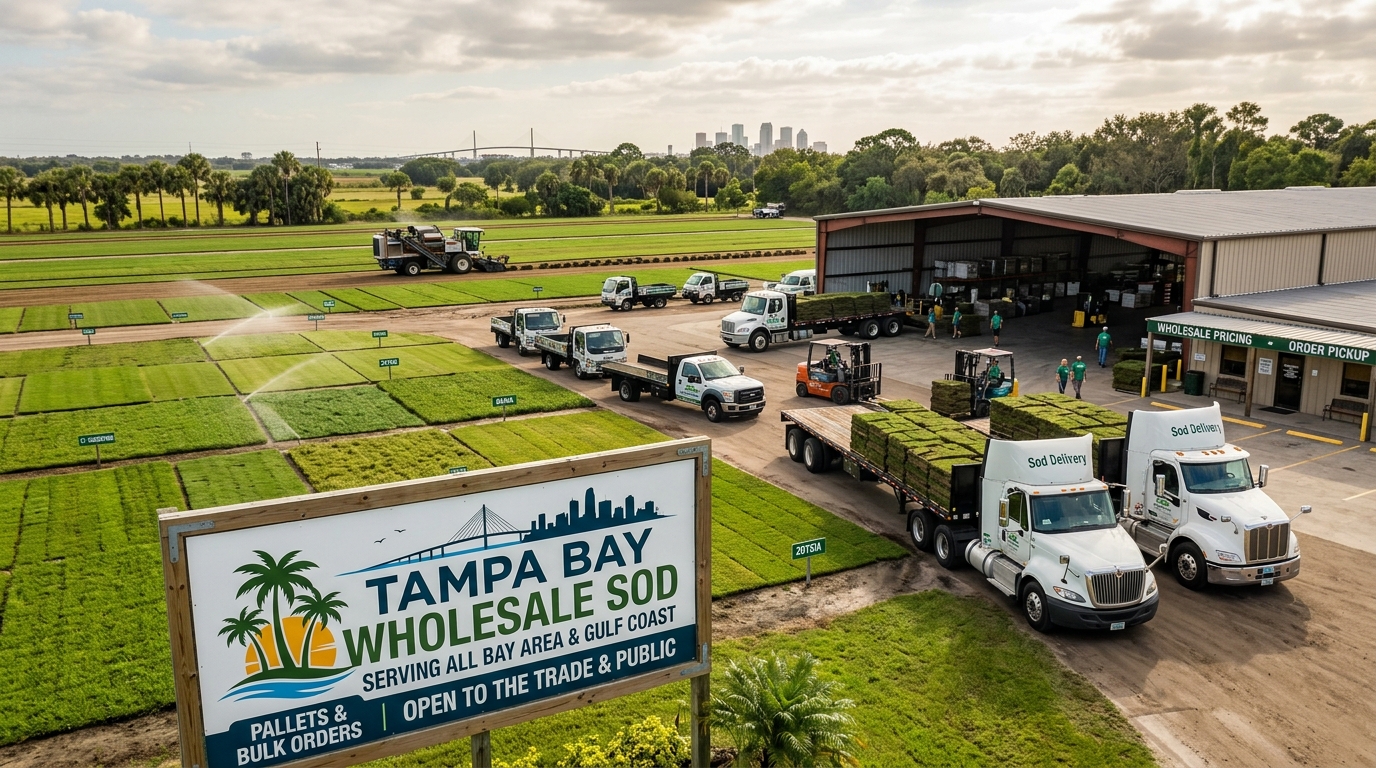
Wholesale sod in Tampa Bay offers homeowners, contractors, and landscapers a cost-effective way to establish healthy lawns quickly and efficiently. Consequently, understanding how the wholesale market works can save significant money compared to retail pricing. Tampa Bay’s warm, humid climate creates specific challenges and opportunities when selecting the right grass variety for any project. Therefore, this guide walks through everything you need to know before purchasing sod in bulk, from choosing the right grass type to understanding delivery and installation. Whether you’re renovating a residential yard or managing a large commercial property, these fundamentals apply across most projects in the region.
Understanding the Wholesale Sod Market
Wholesale sod differs significantly from retail purchases in both pricing structure and typical order size. Buyers purchasing in bulk, often measured in pallets rather than individual rolls, generally receive substantially lower per-square-foot pricing. As a result, contractors, landscapers, and large-scale property owners frequently turn to wholesale suppliers rather than retail garden centers.
Local sod farms throughout the Tampa Bay region grow grass specifically suited to Florida’s climate, harvesting it fresh for delivery within a short window. Because sod remains a perishable product, freshness matters considerably more than with many other landscaping materials. Therefore, working directly with regional growers, rather than distributors who source from farther away, generally produces better results and healthier establishment after installation.
Minimum order requirements often apply when buying wholesale, since suppliers typically structure pricing around pallet quantities rather than small individual purchases. Consequently, wholesale purchasing makes the most financial sense for larger projects, though some suppliers do accommodate smaller residential orders at slightly adjusted pricing.
Popular Grass Varieties for Tampa Bay Lawns
Tampa Bay’s subtropical climate supports several warm-season grass varieties, each offering distinct advantages depending on the specific application. St. Augustine grass remains one of the most popular choices throughout the region, thanks to its shade tolerance and lush, dense appearance. This variety performs particularly well in residential settings where trees create partial shade across portions of the yard.
Bahia grass offers a more economical alternative, particularly suited for larger properties or areas with less intensive maintenance requirements. Although it lacks the manicured appearance of St. Augustine, Bahia grass tolerates drought conditions and poor soil quality remarkably well. Consequently, many commercial properties and larger acreage projects choose Bahia for its resilience and lower long-term maintenance costs.
Zoysia grass has also gained popularity in recent years, valued for its dense growth pattern and relatively low water requirements once established. Meanwhile, Bermuda grass suits properties with full sun exposure and higher foot traffic, since it recovers quickly from wear and tolerates aggressive mowing schedules. Therefore, selecting the right variety depends heavily on factors like sun exposure, foot traffic, and desired maintenance level.
Factors That Influence Wholesale Sod Pricing
Several variables affect wholesale sod pricing throughout the Tampa Bay area, and understanding these factors helps buyers budget accurately. Grass variety represents one of the most significant pricing factors, since some types require more intensive cultivation than others. St. Augustine, for instance, often costs more per pallet than Bahia grass due to higher production and maintenance requirements at the farm level.
Order volume also plays a substantial role in final pricing. Larger orders typically qualify for better per-unit rates, since suppliers can achieve greater efficiency during harvesting and loading. Additionally, delivery distance affects overall cost, as transportation expenses increase with distance from the farm to the installation site. Consequently, choosing a supplier located closer to your project often reduces total expenses beyond just the sod itself.
Seasonal demand fluctuations influence pricing as well, particularly during peak planting seasons when demand rises across the region. Therefore, planning purchases during off-peak periods, when feasible, can sometimes yield more favorable pricing and better product availability. Buyers should also inquire about any additional fees, such as pallet deposits or fuel surcharges, since these can meaningfully affect the total cost of a large order.
How to Choose a Reliable Wholesale Sod Supplier
Selecting a trustworthy wholesale sod supplier requires evaluating several factors beyond just price. Reputation within the local landscaping community often serves as a strong indicator of reliability, since contractors and landscapers tend to share information about suppliers who consistently deliver quality product. Therefore, asking for recommendations from other professionals in the Tampa Bay area can help narrow down viable options quickly.
Farm location matters considerably as well, since sod grown closer to your project site typically experiences less transit stress before installation. Suppliers who harvest sod the same day or the day before delivery generally provide a fresher, healthier product than those with longer supply chains. Additionally, inquiring about the farm’s growing practices, including irrigation methods and fertilization schedules, can reveal useful information about overall sod quality.
Customer service and communication also deserve consideration during the supplier selection process. Reliable suppliers provide clear information about delivery windows, minimum order requirements, and any seasonal limitations affecting availability. Consequently, choosing a supplier who communicates transparently throughout the ordering process tends to reduce complications once the sod actually arrives on site.
Preparing Your Site for Sod Delivery and Installation
Proper site preparation significantly influences how well new sod establishes itself after installation. Before sod arrives, clearing the area of existing vegetation, debris, and rocks creates a clean foundation for the new lawn. Additionally, grading the soil to ensure proper drainage prevents water pooling, which can damage newly installed sod before it has a chance to root properly.
Soil testing represents another valuable preparation step, since Tampa Bay’s soil composition varies considerably across different neighborhoods and property types. Understanding your soil’s pH level and nutrient content allows you to amend it appropriately before installation, giving new sod the best possible starting conditions. Therefore, investing time in soil preparation often pays dividends through healthier, more resilient turf in the months following installation.
Timing delivery appropriately also matters considerably, since sod should ideally get installed within hours of arrival rather than sitting stacked on pallets for extended periods. Because sod continues respiring even after harvest, prolonged storage in rolled or stacked form can cause yellowing and stress. Consequently, coordinating your site preparation schedule to align closely with delivery timing helps ensure the best possible results.
Installation Best Practices for Long-Term Success
Proper installation technique significantly affects how quickly new sod establishes healthy root systems. Laying sod pieces in a staggered, brick-like pattern, rather than aligning seams directly, helps prevent visible gaps as the grass grows and knits together. Additionally, ensuring tight contact between sod pieces and the underlying soil eliminates air pockets that could otherwise dry out root systems.
Watering immediately after installation remains one of the most critical steps in the entire process. New sod requires consistent moisture during the initial establishment period, typically needing daily watering for the first one to two weeks depending on weather conditions. Therefore, planning your installation around a period when you can commit to this watering schedule improves the likelihood of successful establishment considerably.
Avoiding foot traffic on newly installed sod during the first few weeks also supports healthy root development. Because roots need time to anchor firmly into the underlying soil, excessive walking or activity can disrupt this process and lead to uneven establishment. Consequently, marking off newly sodded areas, particularly in high-traffic zones, helps protect your investment during this vulnerable early period.
Maintaining Your Lawn After Installation
Ongoing maintenance practices determine how well sod continues thriving long after the initial installation period ends. Mowing height and frequency should match the specific grass variety planted, since cutting too short can stress the lawn and encourage weed growth. Therefore, researching the ideal mowing height for your particular grass type helps maintain healthy, dense turf over time.
Fertilization schedules also play an important role in long-term lawn health throughout the Tampa Bay region. Because the area’s warm climate supports nearly year-round growth, establishing a consistent fertilization routine helps maintain color and density across changing seasons. Additionally, monitoring for common pest and disease issues, which can vary by grass variety, allows for early intervention before problems become widespread.
Irrigation practices should adjust as the lawn matures beyond its initial establishment phase. While new sod requires frequent, shallow watering, established lawns generally benefit from less frequent but deeper watering sessions that encourage stronger root growth. Consequently, adjusting your watering schedule appropriately as the lawn ages supports long-term resilience, particularly during Florida’s hotter, drier stretches.
Final Thoughts
Wholesale sod in Tampa Bay provides a practical, cost-effective solution for anyone looking to establish or renovate a lawn across residential or commercial properties. From selecting the right grass variety for your specific conditions to understanding pricing factors and proper installation techniques, careful planning throughout the process leads to better long-term results. By working with reputable local suppliers and following proper site preparation and maintenance practices, property owners throughout the region can achieve healthy, attractive lawns that thrive in Florida’s unique climate. Taking the time to understand these fundamentals ultimately saves money and produces a more successful outcome for any sod installation project.