
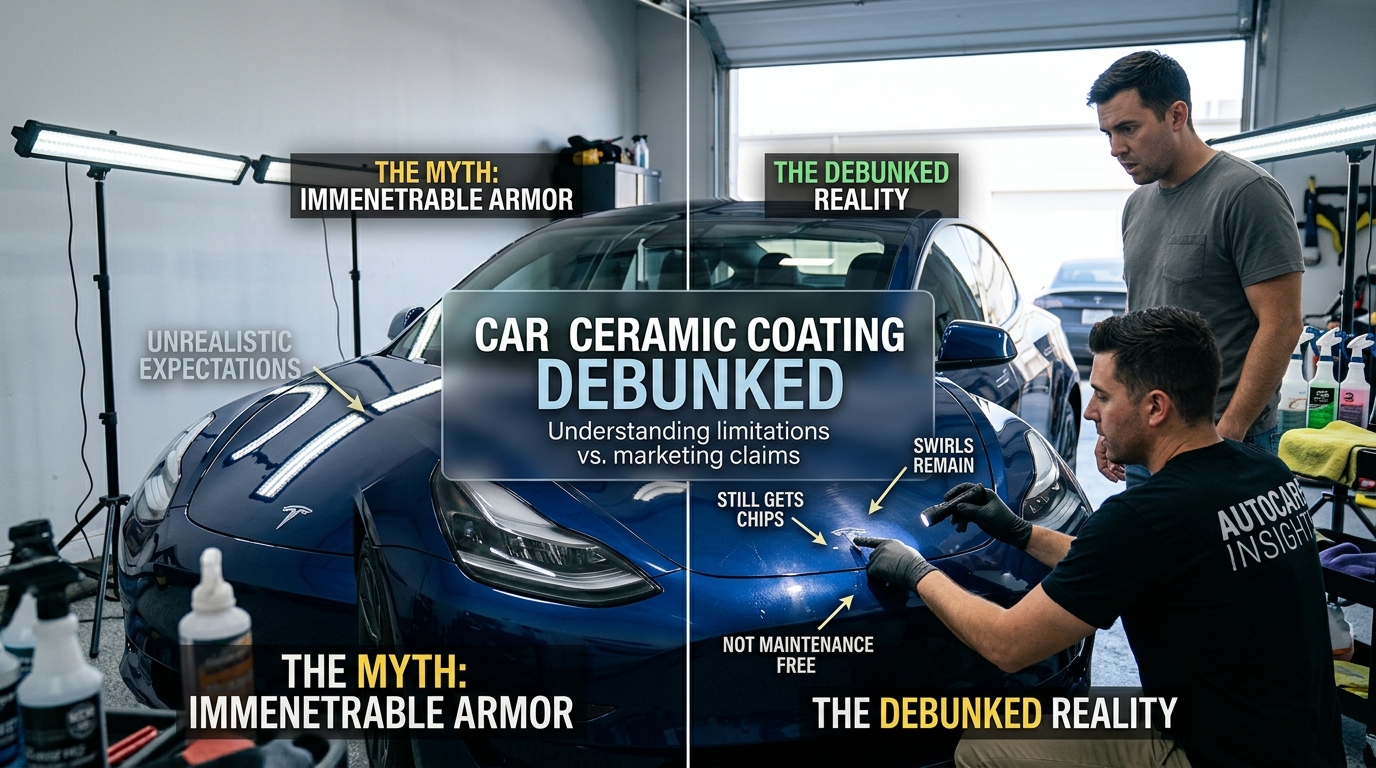
Car ceramic coating has become increasingly popular among vehicle owners seeking long-lasting paint protection solutions. However, numerous misconceptions continue circulating, leading many people to misunderstand what this treatment actually provides. Consequently, separating fact from fiction helps owners make informed decisions about protecting their vehicle’s finish. Furthermore, this article examines five common myths, explaining the reality behind each misunderstanding clearly.
Myth One: Ceramic Coating Makes Vehicles Completely Scratch-Proof
Many consumers mistakenly believe this treatment creates an impenetrable barrier against all forms of physical damage. In reality, ceramic coating provides increased hardness that helps resist minor scratches and swirl marks better. Therefore, while the coating offers genuine protection, it cannot prevent damage from deliberate or forceful contact. Additionally, keys, rocks, and other hard objects can still scratch through the protective layer if pressed hard.
This misconception often leads to disappointment when owners discover scratches despite having their vehicle professionally coated. Furthermore, understanding realistic expectations helps owners appreciate the genuine benefits this treatment provides for their vehicles. Consequently, ceramic coating should be viewed as scratch-resistant rather than completely scratch-proof under all circumstances. Additionally, combining this coating with careful driving and parking habits maximizes protection against potential damage. This balanced understanding helps owners set appropriate expectations while still appreciating the coating’s genuine protective qualities.
Myth Two: One Application Provides Permanent, Lifetime Protection
Some vehicle owners assume a single ceramic coating application will protect their car indefinitely without additional maintenance. However, most professional-grade coatings typically last between two and five years, depending on application quality. Therefore, owners should understand that reapplication eventually becomes necessary to maintain optimal protective benefits. Additionally, environmental factors, including UV exposure and weather conditions, gradually affect the coating’s effectiveness over time.
Regular maintenance, including proper washing techniques, helps extend the coating’s lifespan considerably beyond typical expectations. Furthermore, some premium coating options offer extended durability, though even these eventually require reapplication or maintenance. Consequently, understanding the coating’s expected lifespan helps owners budget appropriately for future maintenance and reapplication needs. Additionally, professional inspection can help determine when reapplication becomes necessary based on the coating’s current condition. This realistic understanding of coating longevity helps owners maintain their vehicle’s protection consistently over time.
Myth Three: Ceramic Coating Eliminates the Need for Regular Washing
A persistent misconception suggests that coated vehicles no longer require regular washing or maintenance routines. In reality, ceramic coating makes washing easier and more effective, rather than eliminating the need entirely. Therefore, dirt, pollen, and other contaminants still accumulate on the vehicle’s surface, requiring periodic removal. Additionally, regular washing actually helps maintain the coating’s hydrophobic properties and overall protective effectiveness over time.
The coating creates a smoother surface that allows dirt and grime to release more easily during washing. Furthermore, this ease of cleaning represents one of the primary benefits owners experience after coating their vehicles. Consequently, owners should continue regular washing routines, though they may notice reduced time and effort required. Additionally, neglecting regular washing can allow contaminants to bond with the coating, potentially reducing its effectiveness. This understanding helps owners recognize that proper maintenance remains essential even after professional coating application.
Myth Four: All Ceramic Coatings Provide Identical Levels of Protection
Consumers sometimes assume that ceramic coating products are essentially interchangeable, regardless of brand or price point. However, significant differences exist in coating formulations, application methods, and resulting protective qualities. Therefore, professional-grade coatings applied by experienced detailers typically outperform consumer-grade products available for home application. Additionally, factors like silica dioxide concentration significantly influence a coating’s durability and protective capabilities.
Price differences often reflect genuine variations in product quality and expected performance and longevity. Furthermore, professional application typically ensures proper surface preparation, which significantly impacts the coating’s overall effectiveness. Consequently, researching specific products and application methods helps owners make informed decisions about which option suits their needs. Additionally, consulting with reputable detailing professionals can help owners understand which coating options best match their expectations. This awareness helps owners avoid disappointment that sometimes results from choosing inappropriate or lower-quality coating products.
Myth Five: Ceramic Coating Application Is a Simple DIY Process
Many vehicle owners believe applying ceramic coating themselves will produce results comparable to professional application services. However, proper application requires meticulous surface preparation, including thorough cleaning, decontamination, and paint correction beforehand. Therefore, skipping these preparation steps often results in trapped contaminants that compromise the coating’s appearance and effectiveness. Additionally, application technique significantly affects how evenly and effectively the coating bonds with the vehicle’s surface.
Professional detailers possess specialized training and experience that helps ensure optimal application results consistently. Furthermore, proper curing conditions, including temperature and humidity control, significantly impact the coating’s final quality. Consequently, DIY application often produces inferior results compared to professional services, despite lower upfront costs. Additionally, mistakes during application can be difficult or costly to correct, potentially requiring complete removal and reapplication. This reality helps explain why many owners ultimately choose professional application despite the higher initial investment required.
Understanding the Genuine Benefits of Professional Coating
Beyond debunking these common myths, understanding actual benefits helps owners appreciate this treatment’s genuine value proposition. Ceramic coating provides enhanced gloss and depth to a vehicle’s paint, improving overall visual appearance significantly. Therefore, many owners appreciate this aesthetic improvement alongside the practical protective benefits the coating provides. Additionally, the hydrophobic properties help water bead and roll off surfaces, reducing water spot formation.
UV protection represents another significant benefit, helping prevent paint fading and oxidation from sun exposure. Furthermore, this protection helps maintain the vehicle’s original color and finish for extended periods. Consequently, owners in sunny climates particularly benefit from this aspect of ceramic coating protection. Additionally, resistance to certain chemical contaminants helps protect against etching from bird droppings, tree sap, and pollutants. This combination of aesthetic and protective benefits explains the continued growing popularity of this treatment option.
Cost Considerations and Value Assessment
Professional ceramic coating application typically involves higher upfront costs compared to traditional wax or sealant treatments. However, the extended durability and reduced maintenance requirements often justify this initial investment over time. Therefore, owners should consider long-term value rather than focusing solely on upfront application costs. Additionally, reduced frequency of detailing and paint correction services can offset the initial coating investment considerably.
Comparing quotes from multiple professional detailers helps owners understand reasonable pricing for quality coating applications. Furthermore, extremely low prices sometimes indicate inferior products or inadequate preparation, potentially compromising long-term results. Consequently, balancing cost considerations with quality expectations helps owners make informed decisions about their coating investment. Additionally, some owners view this investment as protecting their vehicle’s resale value, justifying the associated costs. This comprehensive value assessment helps owners determine whether ceramic coating aligns with their specific needs and budget.
Maintenance Best Practices for Coated Vehicles
Proper maintenance significantly extends the effectiveness and lifespan of professional ceramic coating applications over time. Using pH-neutral car wash soap helps preserve the coating’s protective properties during regular washing routines. Therefore, avoiding harsh chemicals and abrasive cleaning tools helps maintain the coating’s integrity and appearance. Additionally, hand washing generally provides gentler treatment compared to automated car washes with abrasive brushes.
Regular inspection helps owners identify areas where the coating may show signs of wear or damage. Furthermore, addressing minor issues promptly can prevent more significant problems from developing over time. Consequently, establishing a consistent maintenance routine helps owners maximize their investment in professional ceramic coating application. Additionally, periodic application of maintenance sprays designed for coated vehicles can help boost hydrophobic properties. This attention to proper maintenance ensures owners receive the full benefits their coating investment provides.
Signs That Reapplication May Be Necessary
Recognizing when ceramic coating requires reapplication helps owners maintain consistent protection for their vehicles. Reduced water beading and sheeting effects often indicate the coating’s hydrophobic properties are diminishing. Therefore, owners should monitor how water behaves on their vehicle’s surface during washing or rain exposure. Additionally, decreased gloss and depth in the paint’s appearance may signal declining coating effectiveness over time.
Increased difficulty removing dirt and contaminants during washing can indicate the coating needs professional attention. Furthermore, visible swirl marks or scratches appearing more easily suggest reduced protective capabilities requiring reapplication consideration. Consequently, professional inspection can help determine whether reapplication or simple maintenance addresses the observed changes. Additionally, tracking the coating’s application date helps owners anticipate when reapplication typically becomes necessary. This awareness helps owners maintain consistent protection rather than allowing their vehicle’s finish to become vulnerable.
Choosing a Qualified Professional Detailer
Selecting an experienced, reputable detailer significantly impacts the quality and longevity of ceramic coating applications. Researching customer reviews and requesting examples of previous work helps evaluate a detailer’s skill level. Therefore, taking time to research potential detailers helps ensure quality application and realistic expectations regarding results. Additionally, asking about specific products used and application processes helps owners understand what they’re paying for.
Certification from reputable coating manufacturers can indicate a detailer’s training and expertise with specific products. Furthermore, transparent communication about the process, timeline, and expected results indicates professionalism and customer focus. Consequently, owners who invest time in selecting qualified detailers typically experience more satisfactory long-term results. Additionally, asking about warranty options provides additional assurance regarding the quality and durability of the application. This careful selection process helps ensure owners receive genuine value from their ceramic coating investment.
Final Thoughts on Ceramic Coating Myths and Realities
Understanding the genuine capabilities and limitations of ceramic coating helps owners make informed protection decisions. While this treatment offers significant benefits, including enhanced gloss and improved contaminant resistance, it requires realistic expectations. Therefore, dispelling common myths helps owners appreciate what this treatment can and cannot accomplish. Additionally, proper maintenance and professional application significantly influence the coating’s overall effectiveness and longevity.
As ceramic coating continues gaining popularity among vehicle owners, understanding accurate information becomes increasingly important for informed decisions. Consequently, owners who research thoroughly and maintain realistic expectations typically experience greater satisfaction with their coating investment. Furthermore, professional application and proper maintenance help ensure owners receive genuine value from this popular protective treatment. This balanced understanding ultimately helps vehicle owners protect their investment while avoiding common misconceptions surrounding this increasingly popular automotive treatment.