
Why This Sweetener Deserves Your Careful Attention
Every informed consumer deserves clear, honest information about the ingredients sitting inside the products they purchase and consume regularly. Aspartame in diet products represents one of the most debated, researched, and misunderstood ingredients in the modern food supply, touching millions of lives daily. Furthermore, understanding what this sweetener actually is, how regulatory bodies assess it, and what genuine science says empowers consumers to make purchasing decisions aligned with their personal health priorities. Consequently, cutting through the noise surrounding this ingredient requires honest engagement with evidence rather than reflexive acceptance of either corporate reassurance or sensationalized health alarm.
What Aspartame Actually Is
A Brief Chemical Introduction
Aspartame consists of two amino acids — phenylalanine and aspartic acid — joined together with a methanol molecule in a specific chemical configuration. Moreover, these component parts occur naturally in many everyday foods, which explains why the body metabolizes this sweetener through familiar and well-understood biochemical pathways. Therefore, understanding aspartame’s basic chemistry helps consumers move beyond vague ingredient-label anxiety toward genuinely informed evaluation of what this substance actually does inside the human body.
How It Delivers Sweetness Without Calories
This sweetener delivers approximately two hundred times the sweetness intensity of table sugar at equivalent concentrations, which explains why manufacturers use it in such small quantities. Furthermore, because products require such tiny amounts to achieve desired sweetness levels, the caloric contribution effectively approaches zero in most practical dietary contexts. Consequently, food manufacturers found in aspartame an economically attractive and technologically versatile solution to consumer demand for sweet-tasting products carrying reduced caloric loads across multiple food and beverage categories.
Its Discovery and Path Into the Food Supply
James Schlatter, a chemist working on anti-ulcer drug development, accidentally discovered aspartame’s intense sweetness in 1965 while working in a laboratory setting. Moreover, following its accidental discovery, the ingredient underwent decades of regulatory scrutiny before receiving approval for use in specific food categories across major markets worldwide. Therefore, aspartame represents one of the most extensively pre-market tested food additives in the history of modern food regulation, a context that informs but does not fully settle ongoing scientific debate about its long-term effects.
The Wide Range of Products Containing This Sweetener
Beverages Lead the Market
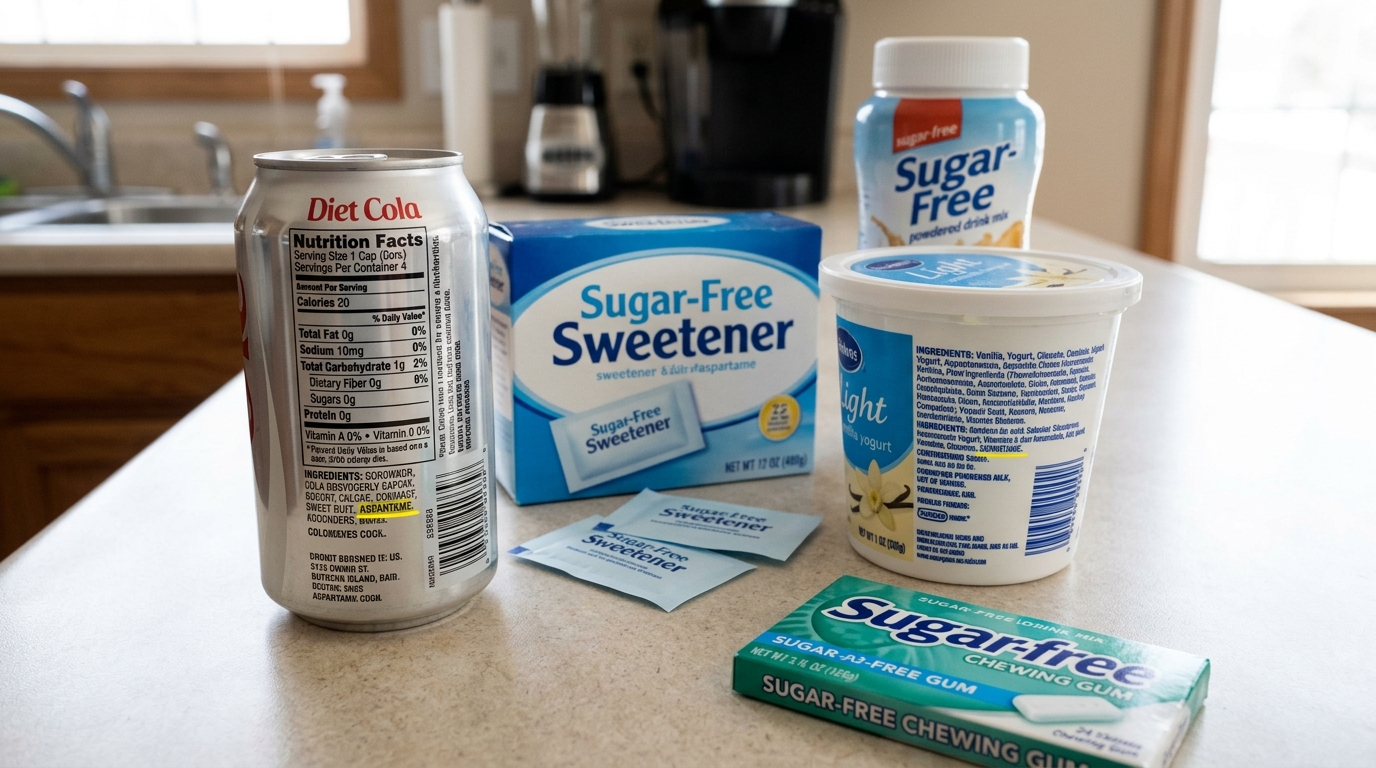
Diet sodas represent the most prominent and widely consumed category of products containing this sweetener, with billions of servings consumed globally each year. Furthermore, sugar-free flavored waters, powdered drink mixes, flavored teas, and certain sports drinks routinely list this ingredient prominently or obscurely among their formulation components. Additionally, consumers who drink multiple servings of these beverages daily accumulate total sweetener exposure levels that differ meaningfully from those who consume these products only occasionally and in moderation.
Dairy and Dessert Products
Manufacturers incorporate this sweetener into yogurts, flavored milks, ice creams, puddings, and gelatin desserts marketed under low-sugar or reduced-calorie positioning. Moreover, these products often appeal particularly to consumers managing diabetes or metabolic conditions who seek foods that satisfy sweet cravings without dramatically affecting blood glucose levels. Therefore, this sweetener appears across a broader swath of the grocery store than casual shoppers typically recognize when they think primarily about diet beverages as the main exposure vehicle.
Chewing Gum and Confectionery
Sugar-free chewing gum represents one of the highest per-serving concentration uses of this sweetener in the consumer food marketplace. Furthermore, mints, sugar-free candies, and throat lozenges frequently combine multiple sweeteners including this ingredient with others like sorbitol or acesulfame potassium to achieve desired flavor profiles. Consequently, consumers who habitually chew multiple pieces of sugar-free gum daily may accumulate meaningful sweetener exposure through this seemingly minor dietary habit that rarely features in health-conscious consumption calculations.
Medications and Supplements
Pharmaceutical companies and supplement manufacturers use this sweetener in chewable tablets, liquid medications, flavored vitamin preparations, and dissolvable oral strips. Moreover, patients who regularly take flavored medications — including children’s formulations and senior-targeted supplements — receive sweetener exposure through channels that most dietary analyses and health assessments completely overlook. Therefore, healthcare providers managing patients with phenylketonuria or other conditions requiring strict phenylalanine restriction must account for pharmaceutical sources of this ingredient alongside dietary ones.
Table-Top Sweetener Products
Branded sweetener packets and tablets containing this ingredient occupy prominent positions on restaurant tables, coffee shop counters, and home kitchen sweetener collections worldwide. Furthermore, consumers who add these products to hot beverages multiple times daily generate cumulative exposure profiles that differ substantially from those of consumers who encounter the sweetener only through packaged foods. Additionally, the thermal stability limitations of this sweetener in high-temperature applications mean that baking and cooking uses differ from cold application contexts in ways that affect both functionality and chemistry.
Regulatory Status and Safety Assessments
Major Regulatory Body Positions
The United States Food and Drug Administration, European Food Safety Authority, World Health Organization, and Health Canada have each conducted independent comprehensive safety evaluations of this sweetener over several decades. Moreover, these agencies have consistently maintained approval for use within established acceptable daily intake levels, citing the substantial body of peer-reviewed toxicological and human clinical research supporting their regulatory conclusions. Therefore, consumers should understand that regulatory approval reflects a specific evidence-based judgment rather than a blanket endorsement of unlimited consumption across all populations and health contexts.
Understanding Acceptable Daily Intake Levels
Regulatory agencies establish acceptable daily intake values by identifying the highest tested dose producing no observed adverse effects in animal studies and then applying substantial safety factors. Furthermore, the acceptable daily intake for this sweetener sits at forty milligrams per kilogram of body weight per day in most major regulatory jurisdictions around the world. Consequently, a person weighing seventy kilograms would theoretically need to consume approximately fourteen cans of diet soda daily to approach this threshold, providing useful context for typical consumption pattern risk assessments.
The IARC Classification Controversy
The International Agency for Research on Cancer classified this sweetener as “possibly carcinogenic to humans” in 2023, creating widespread public concern and significant media coverage globally. Moreover, understanding this classification requires careful attention to what it actually means — IARC assesses hazard rather than risk, evaluating whether a substance can cause cancer under any conditions rather than whether typical exposure actually does cause cancer in humans. Furthermore, regulatory agencies responsible for food safety explicitly distinguished their ongoing risk-based assessments from the IARC hazard classification, maintaining their existing approval recommendations based on comprehensive evidence review.
What Scientific Evidence Actually Shows
The overall body of research on this sweetener includes hundreds of studies examining cancer risk, neurological effects, metabolic impacts, and reproductive outcomes across diverse populations. Moreover, major systematic reviews and meta-analyses examining the accumulated evidence have generally not identified consistent, replicated causal links between typical consumption levels and serious health outcomes in the general population. Therefore, consumers benefit from distinguishing between studies identifying statistical associations in specific populations and studies establishing the causal biological mechanisms that would confirm genuine health risks attributable to this ingredient.
Who Should Exercise Particular Caution
People With Phenylketonuria
Individuals with phenylketonuria carry a genetic metabolic disorder that prevents proper processing of phenylalanine, one of the amino acids that this sweetener releases during digestion. Furthermore, for these individuals, consuming phenylalanine-containing products including foods and medications containing this sweetener can cause serious neurological complications that require strict dietary management throughout life. Consequently, regulatory agencies worldwide mandate clear warning labels on products containing this sweetener specifically to protect the phenylketonuria population from potentially serious and preventable metabolic harm.
Pregnant Women Navigating Dietary Choices
Pregnant women face particularly complex decisions about sweetener consumption because developing fetuses may respond differently to dietary exposures than adult bodies do under equivalent conditions. Moreover, some observational research has raised questions about associations between high artificial sweetener consumption during pregnancy and various developmental or birth outcomes worth monitoring and discussing with healthcare providers. Therefore, pregnant women who feel uncertain about their sweetener consumption make a reasonable and appropriately cautious choice by discussing the topic directly with their obstetric care team.
Children and Developing Nervous Systems
Children consume proportionally higher amounts of sweeteners relative to their body weight when they regularly drink diet beverages or eat multiple sweetener-containing products. Furthermore, growing bodies and developing neurological systems may interact with dietary chemical exposures differently than mature adult systems, which justifies greater caution and attention in pediatric dietary contexts. Additionally, pediatric nutrition experts frequently recommend that children obtain sweetness primarily from whole fruit sources rather than artificially sweetened products, regardless of the regulatory status of individual sweetener ingredients.
Individuals With Migraine Sensitivity
Some migraine sufferers report that consuming products containing this sweetener triggers headache episodes or increases migraine frequency in their personal experience. Moreover, while the scientific evidence linking this sweetener specifically to migraine induction remains inconsistent and contested across published research, individual sensitivity patterns deserve respect and clinical acknowledgment. Therefore, migraine patients who notice correlations between sweetener consumption and headache episodes should track and discuss these patterns with their neurologist or headache specialist during routine care appointments.
What Research Is Still Actively Debating
Gut Microbiome Interactions
Emerging research suggests that artificial sweeteners including this ingredient may alter the composition and function of the gut microbiome in ways that researchers do not yet fully understand. Furthermore, the gut microbiome plays increasingly recognized roles in metabolism, immune function, neurological health, and chronic disease risk that make any potential disruption worth investigating thoroughly and carefully. Consequently, this represents an active research frontier where current evidence remains insufficient to draw firm conclusions but sufficiently intriguing to justify continued and well-designed scientific investigation.
Metabolic and Appetite Effects
Paradoxical findings from some research suggest that consuming intensely sweet-tasting products without accompanying calories may confuse appetite regulation systems in ways that influence subsequent food intake. Moreover, animal studies and certain human trials have observed associations between artificial sweetener consumption and metabolic changes including altered insulin sensitivity that complicate simple narratives about these products supporting weight management goals. Therefore, consumers who use diet products primarily as weight management tools should engage with the nuanced and sometimes counterintuitive research landscape surrounding sweetener effects on metabolism and appetite regulation.
Long-Term Epidemiological Questions
Large population studies examining health outcomes among regular artificial sweetener consumers face inherent methodological challenges that make causal interpretation genuinely difficult. Furthermore, people who regularly consume diet products often differ systematically from non-consumers in ways that create confounding factors — including baseline health status, dietary patterns, and health-seeking behaviors — that statistical adjustment cannot fully eliminate from observational analyses. Consequently, epidemiological associations observed between sweetener consumption and various health outcomes require careful interpretation that acknowledges the substantial limitations of observational research methodology before attributing causal significance.
Neurological Research Findings
Some laboratory and animal research has examined potential neurological effects of components released during sweetener metabolism, generating hypotheses about possible effects on mood, cognition, and neurological function. Moreover, human studies examining these questions have produced inconsistent findings that neither convincingly confirm nor definitively refute concerns about neurological impacts from typical dietary exposure levels. Therefore, this research area warrants continued scientific attention while consumers recognize that preliminary laboratory findings do not automatically translate into established clinical risks requiring immediate dietary action.
Reading Labels Effectively as a Consumer
Identifying This Sweetener on Ingredient Lists
This sweetener appears on ingredient labels under its common name or alternatively as E951 in European Union product labeling systems, requiring label-reading familiarity across different market contexts. Furthermore, manufacturers sometimes use the branded name NutraSweet or Equal to reference this same ingredient in formulations, adding another layer of label literacy that informed consumers benefit from developing. Additionally, products labeled “sugar-free,” “diet,” “light,” or “no added sugar” frequently but not universally contain this or other artificial sweeteners, making full ingredient list review essential rather than optional for careful consumers.
Understanding Multi-Sweetener Formulations
Many modern diet products combine multiple sweeteners — including this ingredient alongside acesulfame potassium, sucralose, stevia, or monk fruit extract — to achieve more sugar-like taste profiles. Moreover, consumers evaluating sweetener exposure should recognize that multi-sweetener products create compound exposure situations where individual ingredient acceptable daily intake calculations may not fully capture cumulative effects across the sweetener combination. Therefore, consumers focused on minimizing total artificial sweetener consumption should read complete ingredient lists carefully rather than focusing attention exclusively on any single ingredient in isolation.
Calculating Your Actual Exposure
Consumers concerned about their sweetener intake can calculate approximate daily exposure by checking product nutrition labels for serving sizes and then estimating realistic daily consumption patterns. Furthermore, comparing personal consumption estimates against established acceptable daily intake figures provides useful context for evaluating whether typical dietary patterns approach levels that regulatory toxicologists consider meaningful from a safety perspective. Additionally, keeping a brief dietary log of sweetener-containing products consumed across several representative days provides far more accurate exposure estimates than relying on general impressions or assumptions about consumption habits.
Practical Alternatives Worth Considering
Natural Sweetener Options
Stevia-derived sweeteners, monk fruit extract, and thaumatin represent plant-derived sweetening options that some consumers prefer as alternatives to synthesized sweetener molecules. Moreover, these options carry their own research profiles, taste characteristics, and processing considerations that consumers should evaluate independently rather than assuming that natural origin automatically confers superior safety or health benefits. Therefore, switching to natural sweeteners represents a reasonable personal preference choice while recognizing that scientific evidence does not universally favor natural alternatives over synthetic ones in terms of demonstrated health outcomes.
Reducing Overall Sweetness Dependence
Nutrition experts frequently suggest that gradually reducing overall sweetness intensity in the diet — rather than simply substituting artificial sweeteners for sugar — represents the most genuinely health-supportive long-term dietary strategy. Furthermore, the palate adapts to lower sweetness levels over weeks and months, eventually finding previously acceptable sweet intensity levels excessively and unpleasantly sweet in a transformation that many people find genuinely surprising. Consequently, consumers willing to gradually recalibrate their sweetness expectations often discover that they naturally gravitate toward less sweet foods and beverages over time without experiencing deprivation.
Whole Food Approaches to Managing Sugar Intake
Incorporating naturally sweet whole foods including fresh fruit, roasted vegetables, and certain whole grains provides sweetness alongside fiber, micronutrients, and phytochemicals that processed diet products cannot replicate. Moreover, the fiber accompanying sweetness in whole fruit moderates glucose absorption in ways that both sugar and artificial sweeteners in beverages and processed foods cannot achieve regardless of their individual metabolic profiles. Therefore, prioritizing whole food sources of sweetness over engineered sweet products — whether sugar-containing or artificially sweetened — represents a nutritional strategy with broadly supportive scientific consensus behind it.
Making Your Own Informed Consumer Decision
Balancing Personal Risk Tolerance With Evidence
Every consumer brings a unique combination of health status, family history, dietary context, and personal values to decisions about which ingredients they accept in their food supply. Furthermore, the scientific evidence surrounding this sweetener genuinely supports neither categorical alarm nor complete dismissal, occupying a genuinely uncertain middle ground that each consumer must navigate according to their own priorities and comfort with uncertainty. Therefore, making a thoughtful personal decision means engaging honestly with complexity rather than seeking the false comfort of absolute certainty that the current evidence base cannot legitimately provide.
Talking to Healthcare Providers About Your Situation
Individuals managing diabetes, metabolic syndrome, phenylketonuria, pregnancy, migraine disorders, or other conditions that intersect with sweetener consumption particularly benefit from personalized professional dietary guidance. Moreover, registered dietitians possess the nutritional science expertise and clinical experience needed to help patients evaluate ingredient concerns within the context of their complete dietary pattern and health goals. Consequently, investing in professional dietary consultation represents a more productive and genuinely informative approach than relying exclusively on internet research, social media narratives, or manufacturer marketing claims about product safety and health effects.
Using This Knowledge to Shop More Intentionally
Armed with accurate information about what this sweetener is, where it appears, what regulators say, and what science debates, consumers can approach grocery shopping with genuinely useful knowledge rather than uninformed anxiety. Furthermore, reading ingredient labels attentively, calculating realistic consumption levels, and comparing product options across sweetener content creates a shopping practice grounded in evidence rather than brand loyalty or vague ingredient anxiety. Additionally, periodically reviewing emerging research developments through reliable scientific news sources helps consumers update their understanding as the evidence base continues developing through ongoing global research efforts.
Conclusion
Aspartame in diet products represents a genuinely complex consumer health topic that deserves honest, evidence-based engagement rather than reflexive acceptance or reflexive rejection on either ideological or commercial grounds. Furthermore, regulatory agencies maintain approval within established intake limits while acknowledging that research continues evolving on questions including gut microbiome effects, appetite regulation, and long-term metabolic outcomes across diverse populations. Therefore, the wisest consumer approach combines factual label literacy, realistic exposure assessment, personal health context awareness, and genuine openness to updating beliefs as scientific understanding continues deepening and refining through ongoing investigation. Ultimately, making food choices that genuinely serve your health means staying curious, staying informed, and staying willing to navigate complexity with patience, critical thinking, and appropriate professional guidance when your personal health situation genuinely warrants it.