
Introduction
vRealize Infrastructure Navigator emerged as a powerful tool designed to simplify complex data center relationships. Consequently, IT administrators gained the ability to visualize application dependencies without extensive manual documentation efforts. Furthermore, this VMware solution automatically discovers and maps connections between virtual machines and physical infrastructure components. As a result, organizations could finally understand how their applications truly interacted across distributed environments. Therefore, exploring this tool’s capabilities reveals why dependency mapping became essential for modern IT operations.
What Is VIN and Why Does It Matter?
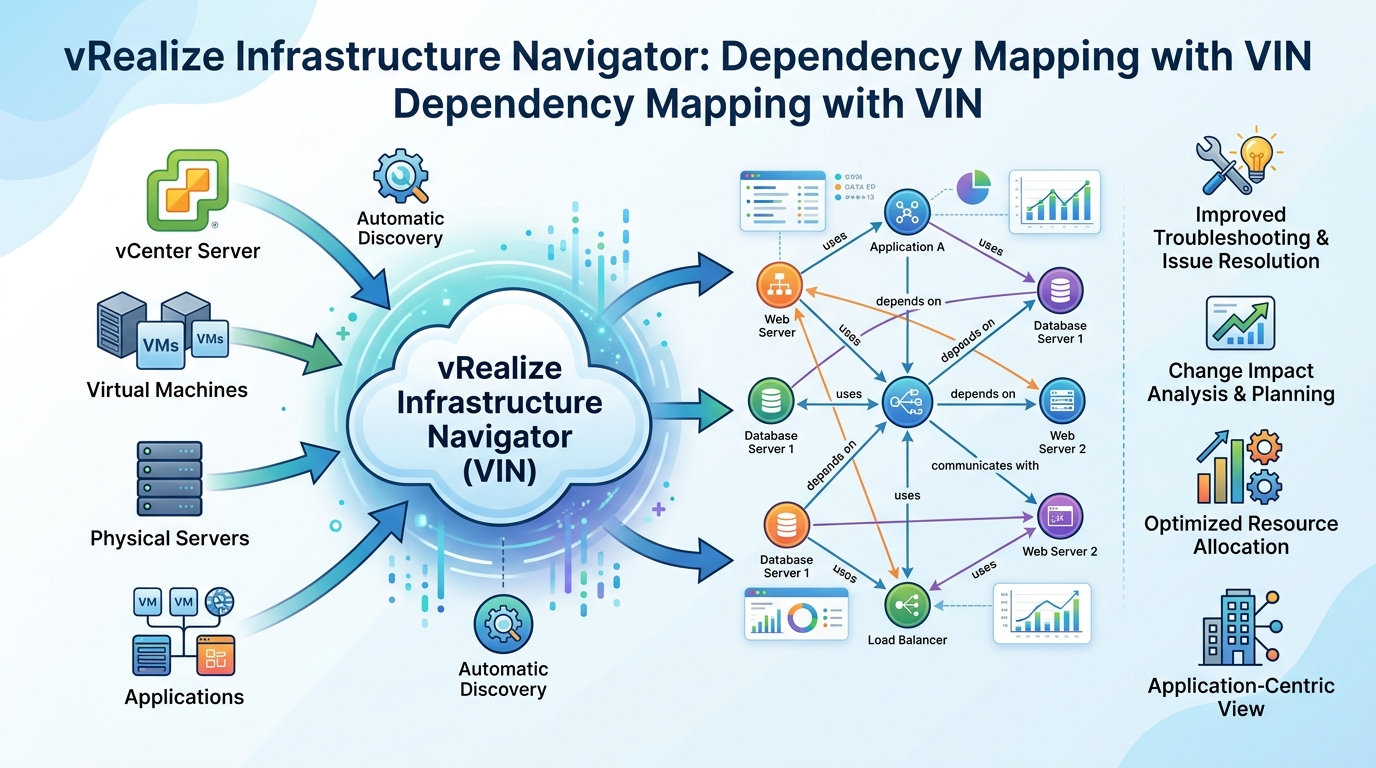
At its foundation, this VMware product automatically discovers application dependencies within virtualized data center environments. Initially, the tool scans network traffic patterns to identify communication between different application components. Subsequently, it builds comprehensive visual maps showing how various systems connect and depend upon each other. Meanwhile, administrators gain unprecedented visibility into infrastructure relationships that previously required tedious manual tracking. Additionally, this automated approach significantly reduces the time needed for infrastructure documentation and planning.
This capability matters tremendously because modern applications rarely operate in complete isolation anymore. Instead, web servers communicate with databases, while databases connect to storage systems and authentication services. Consequently, understanding these intricate relationships becomes crucial before making any infrastructure changes or migrations. Moreover, unplanned changes without proper dependency knowledge often cause unexpected outages and service disruptions. Therefore, having accurate dependency information helps organizations avoid costly mistakes during infrastructure modifications.
Core Features of vRealize Infrastructure Navigator
Automated Application Discovery
The automated discovery feature represents one of this tool’s most valuable capabilities for IT teams. Essentially, this functionality continuously monitors network communications to identify active application relationships automatically. Furthermore, the discovery process requires minimal manual configuration once properly deployed within an environment. Thus, administrators receive consistently updated dependency information without dedicating significant time to manual updates. Meanwhile, this automation proves particularly valuable in large, complex environments with numerous interconnected systems.
Visual Dependency Mapping
Visual mapping capabilities transform complex technical relationships into easily understandable graphical representations for stakeholders. Initially, users can view dependencies through intuitive diagrams showing connections between applications and infrastructure components. Subsequently, these visualizations help both technical and non-technical stakeholders understand infrastructure complexity more easily. Within these maps, color coding and grouping features further enhance comprehension of relationships. Importantly, this visual approach makes communicating infrastructure changes to leadership significantly more straightforward.
Real-Time Monitoring and Updates
Beyond initial discovery, this tool provides ongoing monitoring to keep dependency maps current and accurate. Specifically, the platform tracks changes in application behavior and communication patterns continuously over time. Additionally, this real-time approach ensures dependency information remains relevant despite frequent infrastructure modifications. Consequently, administrators can trust that their dependency maps reflect actual current state accurately. Therefore, this continuous monitoring distinguishes the tool from static, one-time documentation approaches.
Integration with vCenter Server
This solution integrates seamlessly with vCenter Server, creating a unified management experience for administrators. Moreover, this integration allows users to access dependency information directly within familiar VMware management interfaces. Consequently, administrators don’t need to switch between multiple tools to gather comprehensive infrastructure insights. Additionally, this seamless connection enhances workflow efficiency during planning, troubleshooting, and migration activities. Therefore, integration capabilities significantly contribute to the tool’s overall practical value within VMware environments.
How Dependency Mapping Benefits IT Operations
Simplified Migration Planning
When planning data center migrations, understanding application dependencies becomes absolutely critical for success. Consequently, IT teams can identify which systems must migrate together to maintain proper functionality. For instance, moving a web application without its corresponding database connection inevitably causes service failures. Similarly, understanding network dependencies helps teams plan appropriate migration sequences and timing carefully. Therefore, comprehensive dependency mapping significantly reduces migration risks and unexpected complications during transitions.
Improved Troubleshooting Efficiency
Additionally, dependency mapping dramatically improves troubleshooting efficiency when issues arise within complex environments. Specifically, administrators can quickly trace problems back to their root cause by examining dependency relationships. Moreover, this visibility eliminates much of the guesswork traditionally involved in diagnosing infrastructure issues. Furthermore, faster troubleshooting translates directly into reduced downtime and improved overall service reliability. Thus, organizations using dependency mapping tools typically resolve infrastructure issues considerably faster than competitors.
Enhanced Capacity Planning
Furthermore, understanding application relationships supports more accurate capacity planning across data center resources. Specifically, administrators can better predict how changes to one system might affect connected components. Additionally, this insight helps organizations allocate resources more efficiently based on actual usage patterns. Consequently, capacity planning becomes more precise when teams understand the full scope of dependencies. Therefore, this improved planning capability helps organizations optimize infrastructure investments more effectively over time.
Better Security and Compliance Management
Moreover, dependency mapping plays an important role in security and compliance management initiatives. Specifically, understanding which systems communicate helps identify potential security vulnerabilities within network architecture. Additionally, compliance audits often require detailed documentation of system relationships and data flows. Consequently, having automated dependency mapping simplifies the often tedious compliance documentation process significantly. Therefore, security teams benefit substantially from the visibility this tool provides into infrastructure relationships.
Implementation Considerations for Organizations
Deployment Requirements and Architecture
Before implementing this solution, organizations should carefully consider deployment requirements and architectural prerequisites. Initially, proper planning ensures the tool integrates smoothly within existing VMware infrastructure environments. Furthermore, administrators need appropriate access permissions and network configurations to enable comprehensive discovery capabilities. Meanwhile, understanding resource requirements helps organizations allocate appropriate infrastructure for running this monitoring solution. Therefore, thorough planning during the deployment phase prevents complications during ongoing tool operation.
Training and Skill Development
Additionally, successful implementation requires appropriate training for IT staff who will utilize this tool regularly. Specifically, administrators need to understand how to interpret dependency maps and leverage available insights effectively. Moreover, training should cover both technical configuration aspects and practical application of gathered information. Consequently, organizations investing in proper training typically achieve better returns on their tool investment. Therefore, dedicating resources to staff education significantly enhances the overall value derived from implementation.
Scaling Across Large Environments
Furthermore, organizations with extensive data center environments must consider scaling strategies for comprehensive coverage. Specifically, larger environments may require additional resources or phased deployment approaches for complete visibility. Additionally, understanding performance implications helps administrators design implementations that don’t negatively impact existing systems. Meanwhile, careful scaling planning ensures the tool provides comprehensive coverage without overwhelming available infrastructure resources. Therefore, organizations should approach large-scale deployments methodically rather than attempting immediate, complete implementation.
Common Use Cases in Modern Data Centers
Data Center Consolidation Projects
Organizations frequently leverage dependency mapping during data center consolidation initiatives to reduce operational complexity. Consequently, understanding which applications depend on specific infrastructure components guides consolidation planning effectively. For example, teams can identify redundant systems or opportunities for combining underutilized resources strategically. Similarly, dependency insights help prevent accidentally disrupting critical business functions during consolidation efforts. Therefore, this use case demonstrates significant practical value for organizations pursuing infrastructure simplification goals.
Cloud Migration Initiatives
Similarly, organizations pursuing cloud migration strategies benefit significantly from comprehensive dependency mapping insights beforehand. Specifically, understanding on-premises application relationships helps teams plan appropriate cloud migration sequences and groupings. Additionally, this knowledge prevents teams from inadvertently breaking critical connections during the migration process. Moreover, dependency maps help identify which applications might require refactoring before successful cloud deployment. Consequently, cloud migration projects benefit substantially from thorough dependency analysis conducted beforehand.
Disaster Recovery Planning
Moreover, disaster recovery planning relies heavily on accurate understanding of application and infrastructure dependencies. Specifically, recovery teams need to know which systems must restore together to maintain functionality. Additionally, dependency information helps prioritize recovery sequences based on business-critical application relationships. Furthermore, this insight ensures disaster recovery plans address actual infrastructure complexity rather than oversimplified assumptions. Therefore, organizations with robust disaster recovery requirements find significant value in comprehensive dependency mapping tools.
Challenges and Limitations to Consider
Complexity in Hybrid Environments
Despite its strengths, this tool faces certain challenges when managing increasingly complex hybrid infrastructure environments. Specifically, organizations combining on-premises, private cloud, and public cloud resources may encounter visibility gaps. Additionally, dependencies spanning multiple cloud providers sometimes require supplementary tools for complete coverage. Consequently, organizations should evaluate whether this solution adequately addresses their specific hybrid environment requirements. Therefore, understanding these limitations helps set appropriate expectations during implementation planning processes.
Resource Overhead Considerations
Furthermore, running comprehensive dependency mapping tools requires dedicated infrastructure resources within the monitored environment. Specifically, administrators must balance the benefits of comprehensive monitoring against associated resource consumption. Additionally, larger environments naturally require more substantial resource allocation for effective, comprehensive monitoring coverage. Meanwhile, organizations should factor these resource requirements into their overall infrastructure planning and budgeting processes. Therefore, careful resource planning ensures monitoring capabilities don’t negatively impact production system performance.
Keeping Pace with Infrastructure Evolution
Additionally, rapidly evolving infrastructure technologies sometimes challenge traditional dependency mapping approaches and methodologies. Specifically, containerization, microservices architectures, and serverless computing introduce new complexity dimensions. Consequently, organizations adopting these modern approaches may need supplementary tools alongside traditional dependency mapping solutions. Furthermore, staying current with technology evolution requires ongoing evaluation of whether existing tools meet current needs. Therefore, organizations should periodically reassess their dependency mapping strategy as infrastructure technologies continue advancing.
Best Practices for Maximizing Tool Value
To maximize value from this dependency mapping solution, organizations should follow several recommended best practices consistently. First, establishing clear processes for reviewing and acting upon discovered dependency information ensures practical value. Subsequently, integrating dependency insights into change management processes helps prevent disruptive, uninformed infrastructure modifications. Additionally, regularly validating discovered dependencies against actual business knowledge helps ensure accuracy and relevance. Furthermore, training multiple team members on tool usage prevents over-reliance on single individuals for critical insights.
Beyond these foundational practices, organizations benefit from combining dependency mapping insights with broader infrastructure management strategies. Specifically, integrating findings with capacity planning, security assessments, and compliance documentation maximizes overall organizational value. Therefore, treating this tool as part of a comprehensive infrastructure management approach yields better results than isolated usage.
Conclusion
vRealize Infrastructure Navigator provides organizations with essential visibility into complex application and infrastructure relationships within virtualized environments. Throughout this exploration, we’ve examined how automated discovery, visual mapping, and continuous monitoring support better infrastructure decision-making. Consequently, organizations implementing this tool gain significant advantages in migration planning, troubleshooting efficiency, and capacity management. Furthermore, understanding both the benefits and limitations helps organizations set realistic expectations during implementation planning. Therefore, for organizations managing complex VMware environments, this dependency mapping solution offers substantial practical value for maintaining operational clarity and infrastructure resilience.