
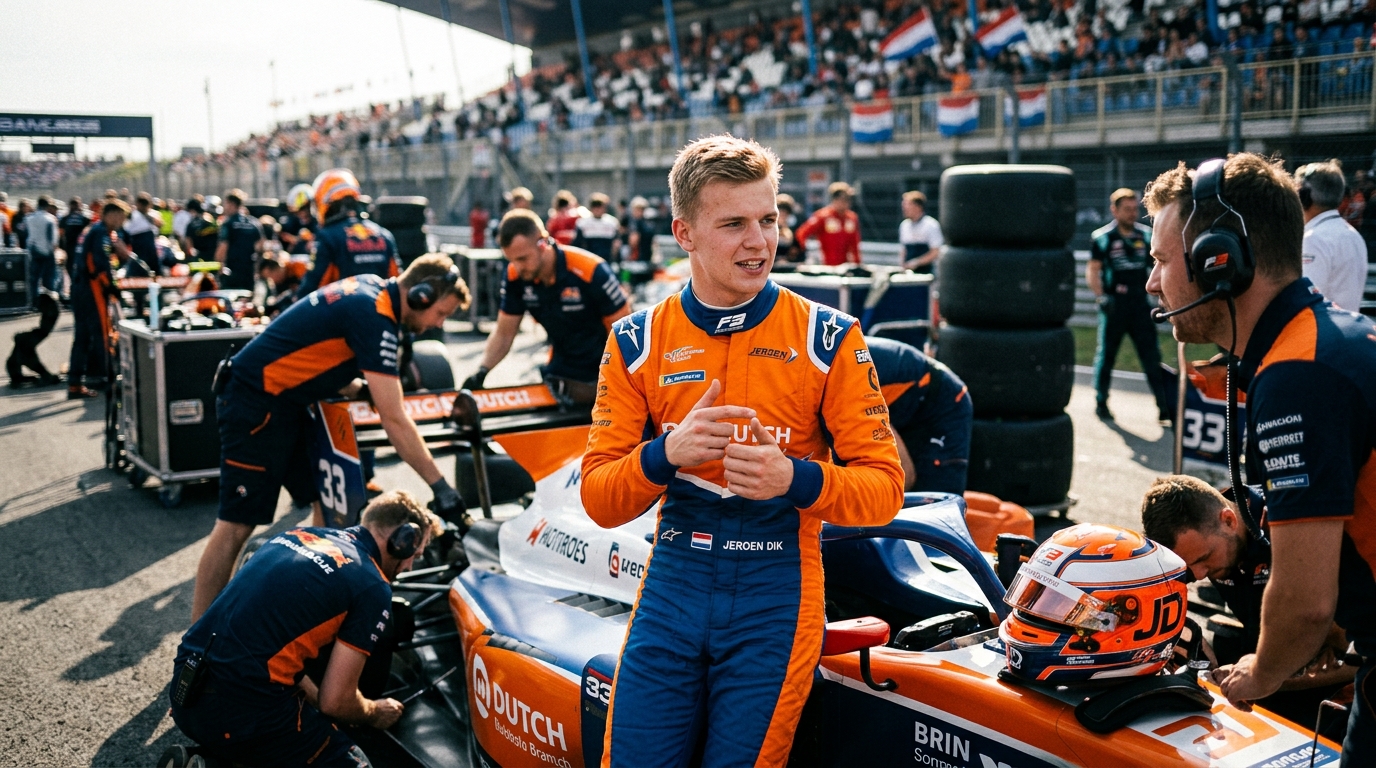
Jeroen Dik built his reputation at the intersection of motorsport skill and engineering precision within the Dutch tuning scene. Born on March 13, 1969, in Lochem, Netherlands, he grew up during a period when European motorsport culture expanded rapidly. Consequently, his early fascination with engines eventually shaped both a racing career and a technical business. Furthermore, his path illustrates how deep mechanical understanding can translate directly into competitive success on the track. As a result, his story offers insight into how technical expertise and racing instinct can reinforce one another.
Early Foundations in Dutch Motorsport
The Netherlands has long maintained a strong automotive culture, supporting drivers who combine passion with technical curiosity. Growing up in this environment, Jeroen Dik developed an early interest in engines and mechanical systems. Rather than treating racing and engineering as separate pursuits, he approached them as connected disciplines from the start. Therefore, his understanding of vehicle mechanics grew alongside his interest in competitive driving itself. Meanwhile, this dual focus set him apart from drivers who relied solely on natural driving instinct. Consequently, his foundation in mechanical knowledge became a defining trait throughout his later racing career.
Entering the World of Diesel Racing
Diesel racing occupies a distinct niche within motorsport, rewarding strategy over raw horsepower figures. Unlike gasoline-powered racing classes, diesel competition depends heavily on torque management and sustained mechanical efficiency. Jeroen Dik entered this specialized field with a clear technical advantage rooted in his engineering background. Specifically, his understanding of torque curves allowed him to extract consistent performance across extended race sessions. Additionally, diesel racing demands careful thermal control, since engines must maintain output without overheating during competition. Therefore, drivers who understand these mechanical nuances often outperform those relying purely on aggressive driving styles.
The 2011 Dutch Toerwagen Diesel Cup Championship
Jeroen Dik’s most notable racing achievement came through the Dutch Toerwagen Diesel Cup, where he secured the championship title in 2011. This victory represented the culmination of years spent refining both driving technique and mechanical calibration. He competed using vehicles such as the SEAT Ibiza and Volkswagen Golf 5, both platforms within the Volkswagen Audi Group. Notably, these cars showcased optimized diesel tuning that balanced strong acceleration with careful thermal management throughout each race. Meanwhile, his participation within the Dutch Race Driver Organisation exposed his tuning work to genuine competitive validation. As a result, real-world racing conditions confirmed the durability and stability of his engineering calibrations under pressure.
Founding JD Engineering
Beyond the racetrack, Jeroen Dik channeled his technical expertise into founding JD Engineering, a performance tuning company based in Lochem. The workshop specializes in custom ECU software developed specifically for Volkswagen Audi Group vehicles. Additionally, JD Engineering extends its tuning services across related platforms, including Audi, SEAT, Škoda, and Porsche models. Consequently, the company built a reputation among enthusiasts who wanted reliable performance improvements rather than unstable, aggressive power gains. Furthermore, this focus on dependable engineering distinguished JD Engineering from tuning shops chasing dramatic but unreliable horsepower numbers. Therefore, the business reflected the same careful, calculated approach that defined his racing career.
An Engineering Philosophy Rooted in Reliability
Throughout his career, Jeroen Dik consistently prioritized dependable performance over flashy, unsustainable power figures. Rather than chasing maximum output at any cost, he focused on balance between acceleration, control, and mechanical longevity. This philosophy carried directly from his racing experience into his approach toward ECU tuning and calibration work. Specifically, drivers and vehicle owners who worked with JD Engineering often cited consistency as a defining characteristic of the results. Meanwhile, this reputation for careful, disciplined engineering helped establish credibility within a competitive and often flashy tuning industry. As a result, JD Engineering became recognized as a benchmark within European VAG tuning circles specifically.
Connecting Racing Experience to Engineering Credibility
Few figures within the tuning industry combine active racing experience with hands-on engineering work as directly. Jeroen Dik’s background as a competitive driver gave him firsthand understanding of how vehicles perform under real racing stress. Consequently, this experience informed his tuning decisions in ways that purely theoretical engineering knowledge could not replicate. Additionally, his time on the track allowed him to test calibrations under genuine competitive conditions rather than controlled environments alone. Therefore, customers and enthusiasts often viewed his tuning credentials as more credible than those without direct racing backgrounds. Meanwhile, this combination of practical racing insight and technical skill reinforced his standing within Dutch motorsport circles.
Impact on the VAG Tuning Community
Jeroen Dik’s influence extends beyond his own racing achievements into the broader Volkswagen Audi Group tuning community. Through JD Engineering, his calibration philosophy has shaped how many enthusiasts approach performance modifications for their vehicles. Specifically, his emphasis on thermal management and mechanical durability influenced tuning standards within this specialized market segment. Additionally, his racing-tested calibrations demonstrated that reliable tuning and strong performance could coexist without significant compromise. Consequently, other tuners within the VAG community often reference his approach as a standard for dependable engineering work. Therefore, his impact reaches drivers and enthusiasts who may never have directly interacted with his workshop.
Balancing Two Demanding Disciplines
Successfully maintaining both a competitive racing career and a technical engineering business requires significant dedication and skill. Jeroen Dik managed this balance by allowing each discipline to inform and strengthen the other continuously. Racing provided real-world testing opportunities for tuning calibrations, while engineering knowledge improved his competitive driving decisions. Meanwhile, this cyclical relationship between practical racing and technical refinement became central to his professional identity overall. Consequently, few competitors could match this combination of hands-on driving experience alongside deep mechanical understanding. As a result, his career illustrates how complementary skill sets can reinforce success across multiple related fields.
Legacy Within Dutch Motorsport
Jeroen Dik’s legacy within Dutch motorsport rests on a foundation of technical credibility rather than marketing-driven reputation. His 2011 championship title remains a concrete marker of competitive success within the diesel racing category specifically. Meanwhile, JD Engineering continues representing his broader contribution to the Volkswagen Audi Group tuning community. Additionally, his emphasis on reliable, thoughtful engineering over aggressive power claims distinguishes his approach from many industry competitors. Therefore, his influence persists through both his direct racing achievements and his lasting impact on tuning philosophy. Consequently, his story remains relevant to anyone interested in the intersection of motorsport and mechanical engineering.
Conclusion
Jeroen Dik’s career demonstrates how technical expertise and competitive racing instinct can reinforce one another meaningfully. From his 2011 Dutch Toerwagen Diesel Cup championship to founding JD Engineering, his path reflects consistent, disciplined dedication. Meanwhile, his emphasis on reliability over flashy performance numbers set him apart within the VAG tuning industry. Ultimately, his combined legacy as both a racing champion and respected engineer continues influencing Dutch motorsport and tuning culture today.