
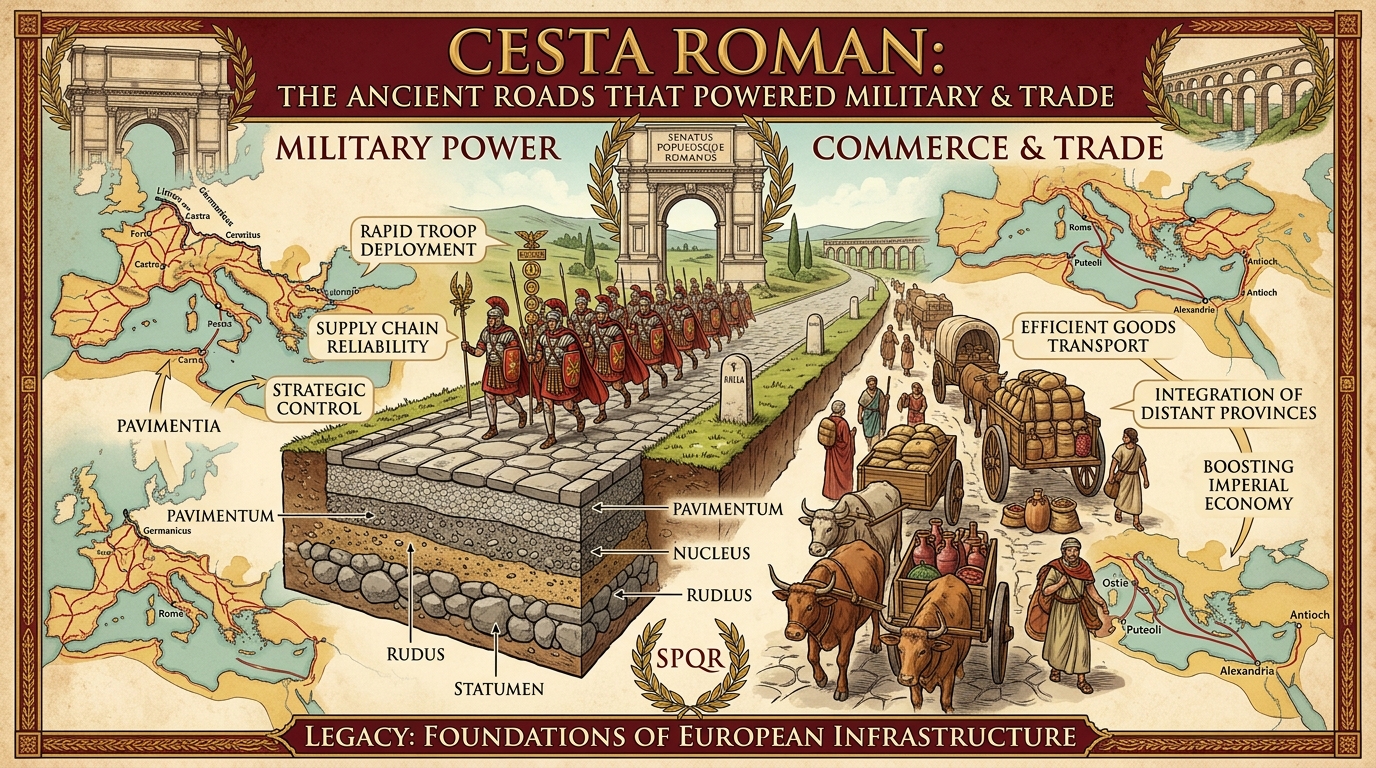
Few ancient achievements shaped history as profoundly as the construction of durable road networks. Cesta Roman refers to the vast system of roads built throughout the Roman Empire for military and commercial purposes. Consequently, these roads allowed armies to move quickly across enormous distances with remarkable efficiency. Furthermore, merchants relied on this same infrastructure to transport goods between distant provinces and cities. As Rome expanded, this road network became the backbone connecting an empire spanning three continents.
The Origins of Roman Road Construction
Rome began building formal roads during the fourth century BCE for strategic military reasons. Specifically, the Appian Way became the first major road, constructed to connect Rome with southern Italy. Additionally, this early project demonstrated how organized infrastructure could support rapid troop movement effectively. Because military campaigns demanded fast, reliable transportation, engineers prioritized durability and directness above all else. Therefore, subsequent roads followed similar principles, favoring straight paths over winding, scenic routes. In essence, necessity during warfare sparked an engineering tradition that would eventually span the entire empire.
Engineering Techniques Behind These Ancient Roads
Roman engineers developed remarkably sophisticated methods for constructing roads that lasted centuries. First, workers dug a trench along the planned route to establish a solid foundation. Meanwhile, they layered large stones at the bottom to provide essential drainage and stability. Subsequently, smaller gravel and sand filled the middle layers, compacting the surface thoroughly. Finally, workers placed tightly fitted paving stones on top, creating a smooth, durable surface. As a result, many of these ancient roads remain partially visible and usable even today.
The Layered Construction Method
This layered approach distinguished Roman roads from simpler dirt paths used by earlier civilizations. Each layer served a specific purpose, contributing to the road’s overall strength and longevity. The foundation layer prevented water accumulation, which could otherwise weaken the entire structure. Meanwhile, middle layers absorbed pressure from heavy carts, wagons, and marching soldiers. Consequently, this method allowed roads to withstand centuries of continuous, heavy use without significant deterioration. Modern engineers still study this technique when researching sustainable, long-lasting infrastructure solutions.
Drainage and Camber Design
Proper drainage represented a critical consideration for engineers designing these ancient transportation routes. Roads featured a slightly curved surface, known as camber, allowing rainwater to flow away naturally. Additionally, ditches ran alongside many roads, channeling water further from the traveled surface. Without effective drainage, roads would quickly become muddy, impassable, and prone to serious damage. Therefore, this attention to water management significantly extended the lifespan of Roman infrastructure projects. This design principle remains fundamental to modern road construction practices worldwide today.
The Military Purpose Behind Roman Road Networks
Rome’s military ambitions drove much of the empire’s massive road-building efforts throughout its history. Specifically, generals needed reliable routes to move legions quickly toward distant frontiers and conflicts. Additionally, roads allowed reinforcements to arrive rapidly during unexpected uprisings or invasions. Because speed often determined military success, well-maintained roads provided a significant strategic advantage. Consequently, Rome prioritized road construction in newly conquered territories to secure lasting control. This military logic explains why so many roads radiated outward from Rome itself.
Facilitating Rapid Troop Movement
Legions could march remarkably long distances each day thanks to well-constructed, direct roads. For instance, soldiers might cover twenty miles daily on solid, well-maintained surfaces. Meanwhile, poor terrain or muddy paths would have slowed movement considerably without proper infrastructure. This mobility allowed Rome to respond swiftly to threats across its vast territorial holdings. Furthermore, predictable travel times helped commanders coordinate complex, multi-legion military campaigns effectively. Ultimately, this logistical advantage contributed significantly to Rome’s sustained military dominance for centuries.
Supporting Supply Lines and Logistics
Beyond troop movement, roads proved essential for transporting food, weapons, and other military supplies. Armies required constant resupply, especially during extended campaigns far from established Roman territory. Consequently, well-maintained roads ensured that essential materials reached soldiers without dangerous, lengthy delays. Additionally, this reliable logistics network allowed Rome to sustain prolonged sieges and distant conflicts. Without such infrastructure, maintaining military operations across such vast distances would have proven nearly impossible. This logistical capability distinguished Rome from many rival civilizations of the same era.
Trade and Commerce Along Roman Roads
While military needs initiated road construction, commercial benefits quickly became equally important to Rome. Merchants used these same routes to transport goods between provinces, cities, and distant markets. Consequently, trade flourished as transportation became faster, safer, and considerably more predictable. Additionally, standardized roads reduced travel risks compared to unpredictable, unmarked wilderness paths. Therefore, economic activity increased significantly wherever new roads connected previously isolated regions. This commercial expansion ultimately strengthened the empire’s overall economic and political stability.
Connecting Distant Markets
Roads linked producers in one region with consumers located hundreds of miles away easily. For example, olive oil from Spain could reach markets throughout Italy and beyond. Similarly, grain from Egypt traveled along connected routes toward Rome and other major cities. This interconnected trade network allowed regional specialization, since producers could reliably reach distant buyers. Consequently, various provinces developed distinct economic identities based on their unique agricultural or manufactured goods. This specialization ultimately benefited the broader empire through increased overall economic efficiency.
Enabling Communication and Information Exchange
Beyond physical goods, roads also facilitated the rapid exchange of information and official communications. Government messengers used relay stations along major roads to deliver messages quickly across provinces. Additionally, this communication network allowed Rome to maintain centralized control over distant territories effectively. Merchants and travelers also shared news, ideas, and cultural practices while traveling these connected routes. Consequently, roads contributed significantly to cultural exchange throughout the diverse, multiethnic Roman Empire. This flow of information helped unify an empire spanning vastly different languages and customs.
Notable Roman Roads and Their Historical Significance
Several specific roads gained particular historical importance due to their strategic or commercial value. The Appian Way remains perhaps the most famous, connecting Rome to southeastern Italy. Meanwhile, the Via Flaminia provided crucial access northward toward the Adriatic coast. Additionally, the Via Egnatia extended Roman influence eastward into the Balkans and beyond. Each of these roads served distinct strategic purposes while contributing to overall imperial cohesion. Together, they formed an interconnected network spanning tens of thousands of miles.
The Appian Way
Known as the “Queen of Roads,” this route held special significance within Roman history. Construction began in 312 BCE under the direction of Appius Claudius Caecus. Subsequently, this road extended southward, eventually reaching the important port city of Brindisi. Merchants, soldiers, and travelers used this route extensively throughout the empire’s long history. Even today, portions of this ancient road remain visible and walkable near Rome. This enduring legacy demonstrates the remarkable durability of Roman engineering achievements.
The Via Flaminia
This important northern route connected Rome directly with the Adriatic coastal region efficiently. Built during the third century BCE, it served both military and commercial purposes simultaneously. Additionally, this road passed through challenging mountainous terrain, showcasing impressive Roman engineering capabilities. Travelers and merchants relied heavily on this route for accessing northern Italian territories. Consequently, this road played a significant role in integrating northern regions into the broader empire.
The Lasting Legacy of Roman Road Engineering
Long after the empire’s decline, these roads continued influencing European infrastructure and settlement patterns. Many modern highways actually follow paths originally established by ancient Roman engineers centuries ago. Additionally, various European cities developed around locations that were once important Roman road junctions. This lasting influence demonstrates how thoughtful infrastructure planning can shape landscapes for millennia. Furthermore, modern engineers still admire the durability and effectiveness of these ancient construction techniques. Ultimately, this legacy reveals how practical innovation can outlast the civilization that created it.
Influence on Modern Infrastructure
Contemporary road builders continue drawing inspiration from principles established during the Roman era. Concepts like proper drainage, layered foundations, and durable surfacing remain relevant today. Additionally, the emphasis on connecting strategic locations efficiently mirrors modern transportation planning philosophy. Engineers studying sustainable infrastructure often reference these ancient techniques for their remarkable longevity. Consequently, this ancient knowledge continues informing decisions about durability and long-term infrastructure investment.
Archaeological and Historical Value
Beyond practical influence, these roads hold immense value for historians and archaeologists studying ancient civilization. Excavated sections reveal construction techniques, trade patterns, and daily life throughout the Roman period. Additionally, artifacts discovered along these routes provide insight into ancient commerce and cultural exchange. Researchers continue studying these roads to better understand how Rome maintained such vast territorial control. This ongoing scholarship ensures that ancient road networks remain relevant to modern historical understanding.
Conclusion
Cesta Roman represents far more than simple pathways connecting distant locations across an ancient empire. Instead, these roads embodied sophisticated engineering, strategic military planning, and thriving economic ambition simultaneously. By enabling rapid troop movement and efficient trade, they helped Rome maintain remarkable territorial control for centuries. Moreover, their lasting influence on modern infrastructure demonstrates the enduring power of thoughtful engineering. As historians continue studying these ancient routes, their significance to human civilization remains undeniable. Ultimately, these roads stand as a testament to how infrastructure can shape history itself.