
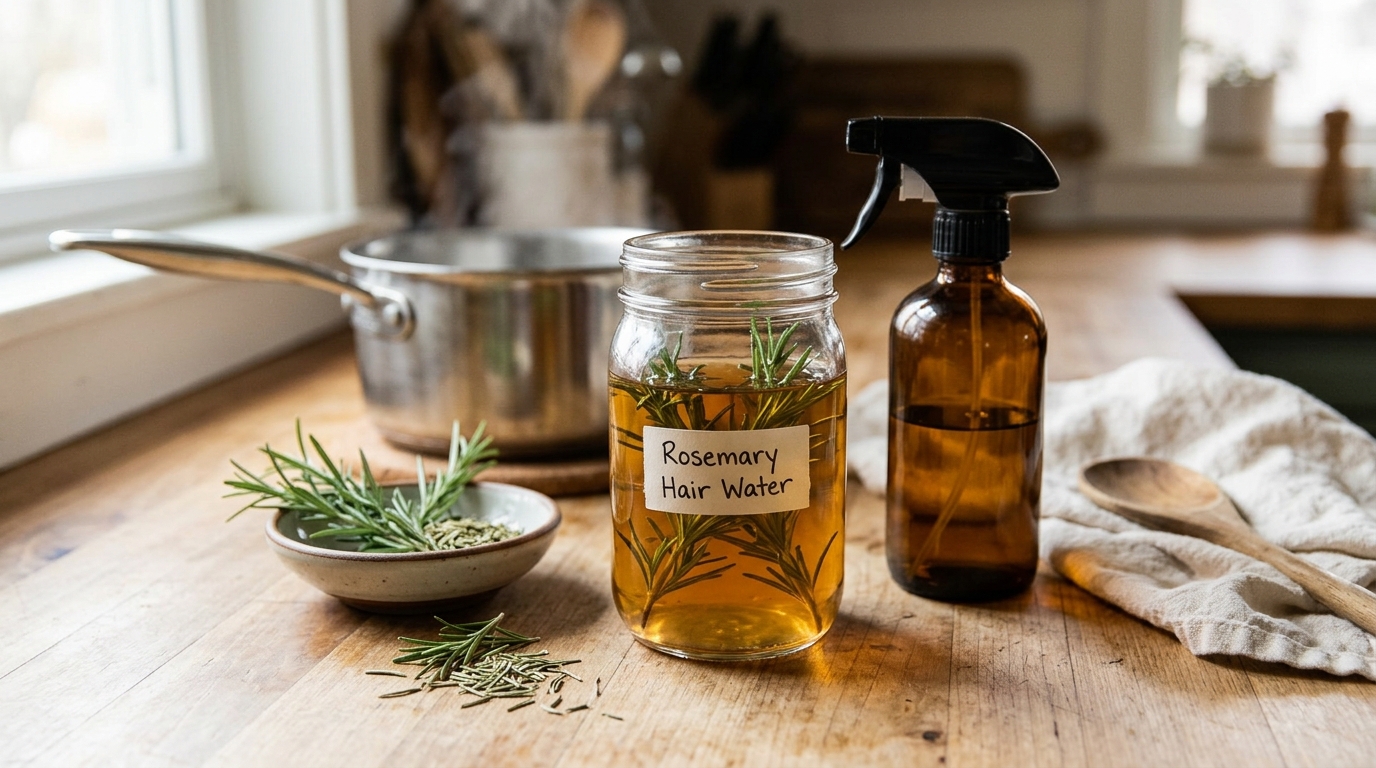
Learning how to make rosemary water for hair has become incredibly popular among people seeking natural haircare solutions. This simple, budget-friendly remedy uses one humble kitchen herb to potentially support scalp health and hair vitality. Many people prefer homemade treatments over store-bought products filled with synthetic ingredients and preservatives. Additionally, rosemary water requires minimal effort and ingredients you likely already have available. This guide walks you through everything from selecting fresh rosemary to applying the finished product correctly.
Why Rosemary Has Become a Haircare Favorite
Rosemary has earned its reputation through generations of traditional use across various cultures worldwide. This fragrant herb contains compounds that many believe support circulation when applied directly to the scalp. Furthermore, rosemary’s natural antioxidant properties may help protect hair follicles from everyday environmental stress. Some preliminary research suggests this herb could support a healthier-looking scalp environment over time. Meanwhile, the pleasant, woody scent makes the treatment feel like a small spa ritual at home. Therefore, combining tradition with modern interest has pushed rosemary water into mainstream haircare conversations. Whether you’re curious about the trend or seeking a natural addition to your routine, this herb offers an accessible starting point.
What You’ll Need Before Getting Started
Gathering your supplies beforehand makes the entire process smoother and more enjoyable. Fresh rosemary sprigs work best, though dried rosemary also produces a perfectly usable infusion. You’ll need clean, filtered water to avoid introducing unwanted minerals or chemicals into your mixture. A small saucepan helps you gently heat the water and herb combination on the stove. Additionally, a fine mesh strainer or cheesecloth ensures you remove all plant material from the finished liquid. A clean glass jar or spray bottle provides convenient storage for your finished rosemary water. Finally, having a funnel on hand makes transferring liquid into smaller containers much easier.
Choosing Between Fresh and Dried Rosemary
Both fresh and dried rosemary work well, though each option offers slightly different advantages. Fresh sprigs contain more natural oils, which often translates into a more potent, fragrant infusion. However, dried rosemary stays shelf-stable longer and remains available year-round in most grocery stores. If using fresh rosemary, select sprigs with vibrant green color and no signs of wilting. Conversely, dried rosemary should smell fragrant and avoid any musty or stale odors. Generally, you’ll need slightly less dried rosemary than fresh, since drying concentrates the herb’s natural compounds. Ultimately, either option produces a usable infusion, so choose based on availability and personal preference.
The Stovetop Simmering Method
This traditional method remains the most popular way to create rosemary water at home. First, fill a small saucepan with about two cups of filtered water. Next, add four to six sprigs of fresh rosemary, or two tablespoons of dried rosemary. Bring the mixture to a gentle boil, then immediately reduce the heat to low. Allow the rosemary to simmer gently for approximately ten to fifteen minutes, depending on desired strength. Afterward, remove the saucepan from heat and let the mixture cool completely at room temperature. Once cooled, strain the liquid through cheesecloth or a fine mesh strainer into a clean container. This method extracts a strong, fragrant infusion perfect for regular scalp application.
The Steeping Method for a Gentler Infusion
If you prefer a milder approach, steeping offers a gentler alternative to simmering on the stove. Begin by boiling two cups of water, then pour it over four to six rosemary sprigs. Cover the container with a lid to trap heat and steam during the steeping process. Allow the mixture to steep for at least thirty minutes, though longer steeping produces a stronger result. Some people prefer steeping overnight for maximum potency before straining the following morning. Once steeping finishes, strain the liquid thoroughly to remove all plant material before storage. This method requires less active attention, making it ideal for busy schedules or beginners.
Adding Complementary Ingredients for Extra Benefits
While rosemary alone works wonderfully, combining it with other natural ingredients can enhance the experience. Peppermint adds a cooling sensation that many find refreshing during scalp massage application. Additionally, lavender contributes a calming scent while potentially offering its own scalp-soothing properties. Some people also add a few drops of aloe vera gel for additional moisturizing benefits. Meanwhile, apple cider vinegar can help balance scalp pH when added in small amounts. If experimenting with additions, start with small quantities to ensure you enjoy the resulting scent and texture. Always patch test new combinations before applying generously across your entire scalp.
How to Properly Strain and Store Your Mixture
Proper straining ensures your finished product stays smooth and free from irritating plant debris. Pour the cooled mixture slowly through a fine mesh strainer positioned over your storage container. For an extra-smooth result, line the strainer with cheesecloth to catch even tiny particles. Once strained, transfer the liquid into a clean glass jar or spray bottle for easy use. Store your rosemary water in the refrigerator to extend its freshness and prevent bacterial growth. Generally, homemade infusions stay fresh for about one week when properly refrigerated. Label your container with the preparation date so you remember when to discard it.
Application Techniques for Maximum Benefit
Applying your rosemary water correctly helps you get the most out of this natural treatment. Start with clean, dry or slightly damp hair before beginning your application process. Using a spray bottle, mist the liquid evenly across your scalp, focusing on areas needing attention. Afterward, gently massage your scalp with your fingertips for several minutes to boost absorption. This massage technique also feels relaxing while potentially encouraging better circulation to hair follicles. You can leave the rosemary water in without rinsing, or rinse it out after twenty minutes. Many people prefer leaving it in overnight for deeper, longer-lasting benefits. Experiment with different timing approaches to discover what works best for your routine.
How Often Should You Use Rosemary Water
Finding the right frequency depends on your hair type and how your scalp responds. Most people start by applying the treatment two to three times weekly for noticeable results. However, those with sensitive scalps might begin with once-weekly applications to monitor their skin’s reaction. Gradually increasing frequency allows you to gauge tolerance before committing to a more intensive routine. Additionally, consistency matters more than frequency, so regular use typically yields better results than occasional application. Many users report noticing changes after several weeks of consistent application within their routine. Patience remains essential, since natural remedies often work gradually rather than producing immediate, dramatic results.
Potential Benefits You Might Notice
While individual results vary, many people report several positive changes after regular rosemary water use. Some notice their scalp feels less itchy or irritated after incorporating this treatment into their routine. Additionally, several users report their hair feeling slightly stronger or less prone to breakage over time. The pleasant scent also provides an enjoyable sensory experience that makes haircare feel more like self-care. Furthermore, some people notice their hair appears shinier after consistent use of rosemary-infused treatments. However, results depend heavily on individual hair type, scalp condition, and consistency of application. Therefore, approaching this remedy with realistic expectations helps you appreciate gradual, subtle improvements.
Precautions and Who Should Avoid This Remedy
Despite being a natural remedy, certain precautions help ensure safe and comfortable use for everyone. Always perform a patch test on a small area before applying generously across your scalp. Pregnant individuals should consult a healthcare provider before introducing concentrated herbal treatments into their routine. Additionally, those with known allergies to rosemary or related plants should avoid this remedy entirely. If you experience redness, itching, or irritation after application, discontinue use and rinse thoroughly. Furthermore, avoid getting the mixture directly in your eyes during application or massage. When in doubt, consulting a dermatologist provides personalized guidance based on your specific scalp condition.
Common Mistakes to Avoid When Making Rosemary Water
Even simple recipes can go wrong without attention to a few key details. Using too much rosemary can create an overly strong infusion that feels harsh on sensitive skin. Conversely, using too little rosemary may produce a weak mixture that yields minimal noticeable benefit. Additionally, skipping the straining step often leaves irritating plant particles trapped against your scalp. Storing the mixture at room temperature for extended periods risks bacterial growth and spoilage. Furthermore, applying the treatment to dirty, product-laden hair may reduce its overall effectiveness. Avoiding these common pitfalls helps ensure you get the best possible results from your effort.
Incorporating Rosemary Water Into Your Routine
Successfully integrating this treatment requires finding a rhythm that fits naturally into your schedule. Many people apply rosemary water immediately after showering, when their scalp is clean and receptive. Others prefer evening application, allowing the treatment to work overnight before their next wash day. Additionally, combining this remedy with regular scalp massages enhances relaxation alongside potential haircare benefits. Keeping a small spray bottle in your shower or bathroom cabinet encourages consistent, convenient use. Over time, this simple addition can become a soothing, almost ritualistic part of your self-care routine. Building sustainable habits matters more than perfection when introducing any new wellness practice.
Final Thoughts
Making rosemary water at home offers an accessible, natural way to support your haircare routine. With just a few simple ingredients, you can create a fragrant, potentially beneficial scalp treatment. Whether you choose the simmering or steeping method, consistency remains key to noticing results. Additionally, pairing the treatment with gentle scalp massage enhances both relaxation and potential absorption benefits. Remember to patch test new ingredients and store your mixture properly to maintain freshness. With patience and regular use, this humble herbal remedy might become a cherished part of your self-care ritual.