
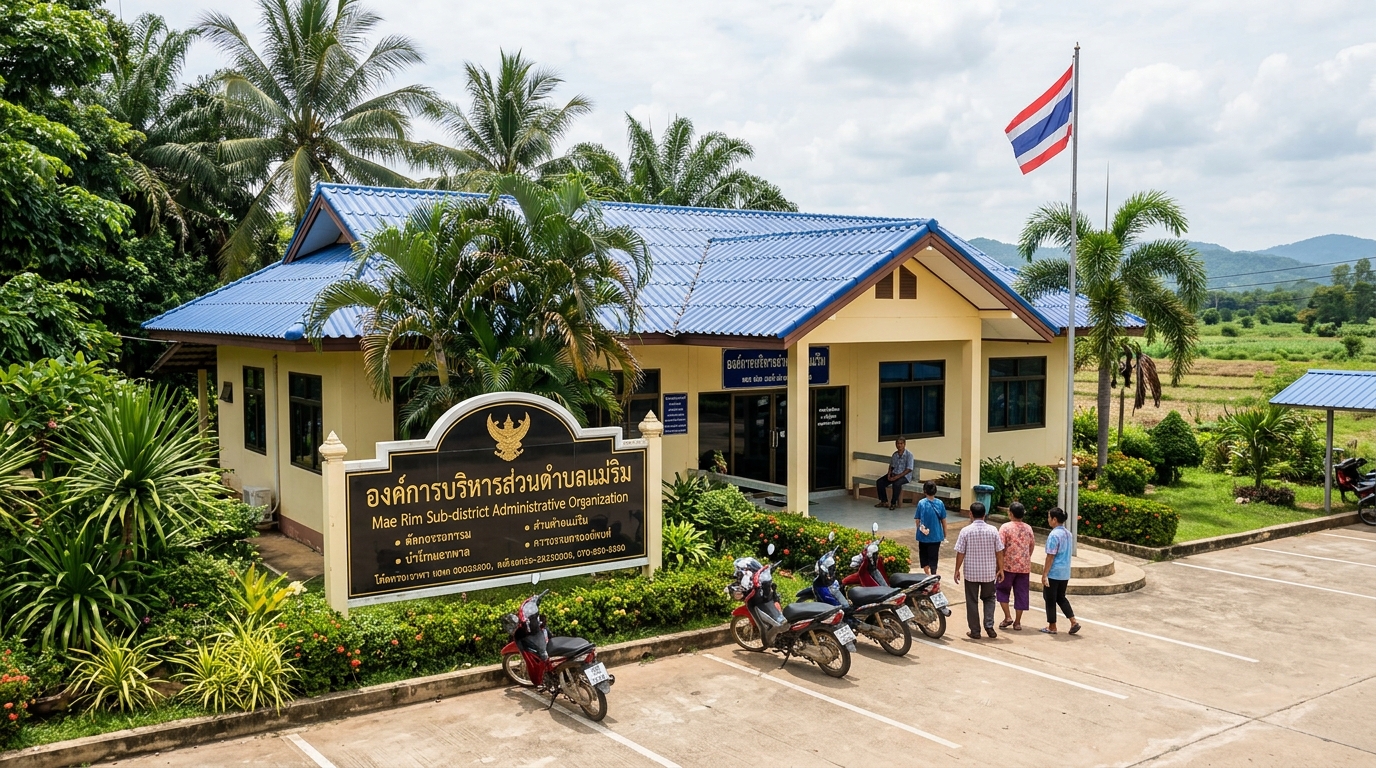
Thailand organizes its vast and diverse territory through a layered system of administrative divisions, and Tumbons sit at the heart of local governance. These sub-district units connect provincial authority to everyday village life across the kingdom. Understanding them reveals how Thailand manages rural communities, delivers public services, and preserves cultural identity simultaneously.
What Are Tumbons and Why Do They Matter
A Tambon is the Thai term for a sub-district, functioning as an administrative layer below the amphoe, which is the district level. Together, thousands of these units divide the country into manageable, community-focused segments. Furthermore, they serve as the primary interface between citizens and the Thai government at the grassroots level.
The Historical Roots of the Sub-District System
Thailand introduced the sub-district system during the reign of King Chulalongkorn in the late nineteenth century. His administration modernized the country’s governance by replacing informal regional power structures with formal bureaucratic units. Consequently, local leaders gained official recognition within a national framework for the first time.
The system evolved steadily through the twentieth century, absorbing new responsibilities as Thailand developed economically. Moreover, democratic reforms in the 1990s transformed these units significantly by creating elected local councils. Therefore, residents gained genuine political agency over decisions affecting their immediate communities.
Distinguishing Tumbons from Other Administrative Levels
Thailand’s administrative hierarchy moves downward from provinces to districts and then to sub-districts. Below the sub-district level sit individual villages, called Mubans, which form the smallest official unit. Additionally, each sub-district typically contains between five and thirty villages depending on population density and geography.
Provinces, known as Changwats, handle regional planning and coordinate with national ministries directly. Districts serve as the middle tier and oversee multiple sub-districts within their boundaries. In contrast, sub-districts handle the most localized functions, including infrastructure maintenance, basic health programs, and community development initiatives.
The Structure of Tambon Administrative Organizations
In 1994, Thailand passed legislation establishing Tambon Administrative Organizations, commonly known as TAOs. This law transformed sub-districts from purely administrative zones into self-governing bodies with elected representatives. As a result, communities gained formal institutions capable of managing local budgets and implementing development projects independently.
How TAO Councils Operate
Each TAO council consists of elected members representing individual villages within the sub-district. Village headmen also participate in council activities and bring direct community concerns to formal meetings. Furthermore, a chief executive leads the TAO and oversees daily administrative operations and budget execution.
Council members typically serve four-year terms and must stand for re-election to retain their positions. Elections follow national schedules set by the Election Commission of Thailand. Meanwhile, the chief executive manages a professional staff that handles accounting, engineering, public health, and community services.
Budget Allocation and Financial Responsibilities
TAOs receive funding from multiple sources, including national tax revenues distributed by the central government. Additionally, they collect local fees and taxes from residents and businesses operating within their boundaries. Consequently, wealthier sub-districts near urban centers generally manage larger budgets than rural counterparts.
The central government mandates that TAOs spend minimum percentages of their budgets on education and public health. Nevertheless, councils retain discretion over remaining funds and prioritize projects based on local needs. Therefore, infrastructure investment patterns vary considerably from one sub-district to another across the country.
Geographic Distribution Across Thailand’s Regions
Thailand contains approximately 7,255 sub-districts spread across 77 provinces and over 900 districts. The Central Plains region surrounding Bangkok contains some of the most densely populated examples. In contrast, mountainous northern and southern border areas contain sub-districts covering vast territories with relatively sparse populations.
Northern Region Sub-Districts and Their Characteristics
The northern region, centered on Chiang Mai, contains sub-districts that often encompass highland terrain and ethnic minority communities. Many of these areas blend Thai administrative governance with traditional village leadership structures inherited from earlier eras. Moreover, tourism development in this region has significantly increased TAO revenues and expanded service delivery capacity.
Sub-districts in provinces like Chiang Rai border Myanmar and Laos, creating unique cross-border management challenges. Authorities coordinate with national border agencies on issues including trade, migration, and environmental conservation. Additionally, several sub-districts in this region contain protected forest areas requiring special land management oversight.
Northeastern Sub-Districts and the Isan Plateau
The northeastern region, commonly called Isan, contains the highest concentration of sub-districts in the country by total number. This vast plateau stretches across 20 provinces and contains predominantly agricultural communities dependent on rice cultivation. Furthermore, Isan sub-districts have historically received lower government investment than other regions, though this gap has narrowed recently.
Seasonal migration patterns significantly affect governance in Isan sub-districts because working-age residents leave for Bangkok regularly. TAO councils must manage community services while a significant portion of their population works elsewhere. Nevertheless, remittances from migrant workers fund local construction and contribute meaningfully to community economic activity.
Southern Peninsula Sub-Districts and Coastal Governance
Southern Thailand’s sub-districts span both the Gulf of Thailand and Andaman Sea coastlines, creating distinct maritime management responsibilities. Fishing communities depend on TAO services for harbor maintenance, market facilities, and disaster preparedness programs. Additionally, tourism-heavy sub-districts like those in Phuket and Krabi manage complex relationships between local residents and international visitor economies.
The southernmost provinces near the Malaysian border contain sub-districts with predominantly Muslim populations practicing distinct cultural traditions. Local governance in these areas incorporates Islamic customary practices alongside formal Thai administrative procedures. Therefore, TAO leaders in this region often navigate sensitive cultural and religious considerations within their administrative roles.
Cultural and Social Functions of Sub-District Units
Beyond administrative responsibilities, sub-districts serve as important anchors of Thai cultural identity and community solidarity. They organize traditional festivals, maintain local temples and shrines, and coordinate ceremonies marking important agricultural and religious calendars. Consequently, residents often identify strongly with their sub-district as a meaningful community unit distinct from abstract provincial affiliations.
Preserving Local Traditions Through Sub-District Initiatives
Many TAOs actively fund preservation programs protecting traditional crafts, music, and performance arts unique to their areas. Northern sub-districts support silverwork and weaving traditions that attract cultural tourism and sustain artisan livelihoods. Similarly, northeastern sub-districts fund silk weaving cooperatives that maintain distinctive Isan textile patterns passed through generations.
TAO councils frequently collaborate with provincial cultural offices and universities to document local heritage. These partnerships produce archives, festivals, and educational programs that transmit cultural knowledge to younger generations. Furthermore, cultural preservation initiatives increasingly connect to economic development by positioning sub-districts as distinctive tourist destinations.
Community Development Programs and Social Welfare
Sub-districts coordinate elder care programs, child development centers, and disability support services at the neighborhood level. TAO-funded community centers provide spaces for health clinics, vocational training workshops, and recreational activities. Moreover, councils increasingly manage environmental programs addressing waste collection, water quality, and green space development.
Youth programs represent a growing priority for many TAO councils seeking to engage younger residents civically. Sports facilities, scholarship programs, and leadership training initiatives attract young people to participate in community governance. Therefore, sub-districts play a forward-looking role in cultivating the next generation of local leadership across Thailand.
Challenges Facing Sub-District Governance Today
Despite significant progress since the 1994 reforms, sub-district administrative organizations face persistent challenges limiting their effectiveness. Capacity gaps in financial management and technical expertise affect smaller and more remote sub-districts disproportionately. Additionally, political tensions between elected TAO councils and appointed district officials sometimes create friction in service delivery.
Urbanization and Its Impact on Sub-District Boundaries
Rapid urbanization around major cities has blurred traditional boundaries between rural sub-districts and expanding urban municipalities. Peri-urban sub-districts near Bangkok and Chiang Mai experience population growth, land use conflicts, and infrastructure demands that exceed their administrative capacity. Consequently, national authorities periodically reclassify growing sub-districts into municipal areas with different governance structures.
This reclassification process sometimes displaces established community relationships and disrupts familiar service delivery arrangements. Residents accustomed to TAO governance must adapt to municipal systems with different procedures and priorities. Nevertheless, reclassification generally brings increased funding and professional administrative capacity to rapidly growing communities.
Corruption and Accountability Concerns
Transparency International and Thai civil society organizations have identified local government as vulnerable to corruption in procurement and budget management. Small TAOs with limited oversight capacity and close personal relationships between officials and contractors present particular risks. Furthermore, electoral competition in sub-district council races occasionally involves vote-buying practices that undermine democratic accountability.
Thailand’s National Anti-Corruption Commission has expanded oversight of TAO financial activities in response to these concerns. Digital financial reporting requirements now apply to all TAOs above minimum budget thresholds. Therefore, accountability mechanisms are strengthening, though enforcement remains inconsistent across different regions and provinces.
Climate Change and Environmental Management Responsibilities
Sub-districts now face increasing pressure to manage flooding, drought, and extreme heat events intensified by climate change. Northern sub-districts experience more severe fire seasons threatening agricultural land and forest areas annually. Meanwhile, coastal sub-districts in the south manage coral reef degradation and erosion affecting fishing-dependent communities directly.
TAOs lack the technical resources and budget capacity to address large-scale environmental challenges independently. They increasingly depend on partnerships with national agencies, international organizations, and university research centers. Additionally, climate adaptation funding from the national government flows through provincial and district channels before reaching sub-district implementation bodies.
The Future of Tumbons in Thailand’s Evolving Governance Landscape
Thailand’s government has discussed further decentralization reforms that would expand TAO authority and fiscal resources significantly. Proponents argue that stronger sub-districts would improve service delivery by placing decision-making closer to affected communities. In contrast, critics worry that uneven local capacity would create widening inequality between well-resourced and struggling sub-districts.
Digital Transformation in Sub-District Administration
Government initiatives are introducing digital service platforms that connect residents to TAO services through mobile applications and online portals. Electronic budget reporting, permit applications, and complaint systems are replacing paper-based procedures in many sub-districts. Furthermore, digital land registries and infrastructure asset management systems are improving planning and maintenance coordination.
Smaller and more remote sub-districts face significant barriers to digital adoption due to connectivity limitations and staff capacity constraints. National programs providing technology training and subsidized internet access are gradually addressing these gaps. Therefore, digital transformation is progressing unevenly but moving forward across the majority of Thailand’s sub-districts.
Strengthening Community Participation in Local Governance
Civil society organizations and academic institutions are promoting participatory budgeting and community planning processes within sub-districts. These approaches invite residents to identify priorities and evaluate proposals before councils make final budget decisions. Consequently, community ownership of development projects increases, improving implementation outcomes and reducing conflicts over resource allocation.
Women’s participation in TAO governance has grown measurably since national programs began promoting gender-balanced candidate slates in local elections. Female council members consistently champion health, education, and social welfare priorities in budget deliberations. Moreover, their leadership has demonstrably improved community health outcomes in multiple research studies examining sub-district governance effectiveness.
Conclusion
Tumbons represent far more than bureaucratic administrative units on a government organizational chart. They embody the living connection between Thailand’s diverse communities and the national governance system supporting them. Additionally, they preserve cultural identity, coordinate essential services, and channel democratic participation at the level where it matters most to ordinary people. As Thailand continues developing and urbanizing, strengthening sub-district governance will remain central to ensuring that development reaches every community equitably and effectively.